
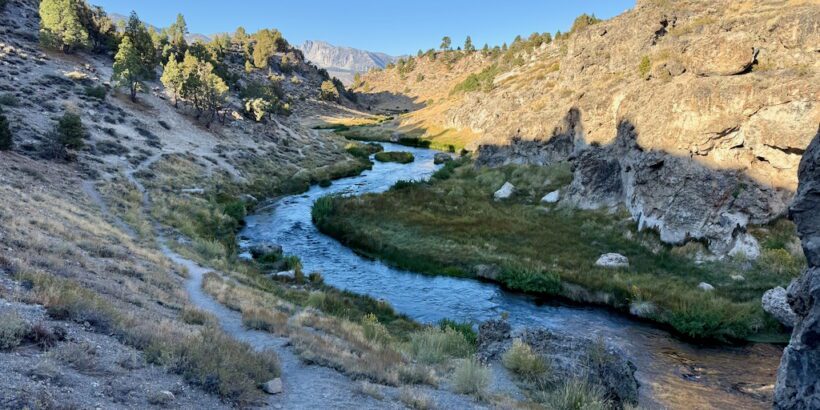
Growing up on the Gulf Coast of Texas, geothermal activity wasn’t exactly part of the scenery. (Unless you count sweating through August, which I don’t.) It wasn’t until I started traveling more that I got hooked on these kinds of places. There’s just something about watching the Earth bubble, steam, and hiss that feels alive in a way you don’t forget.
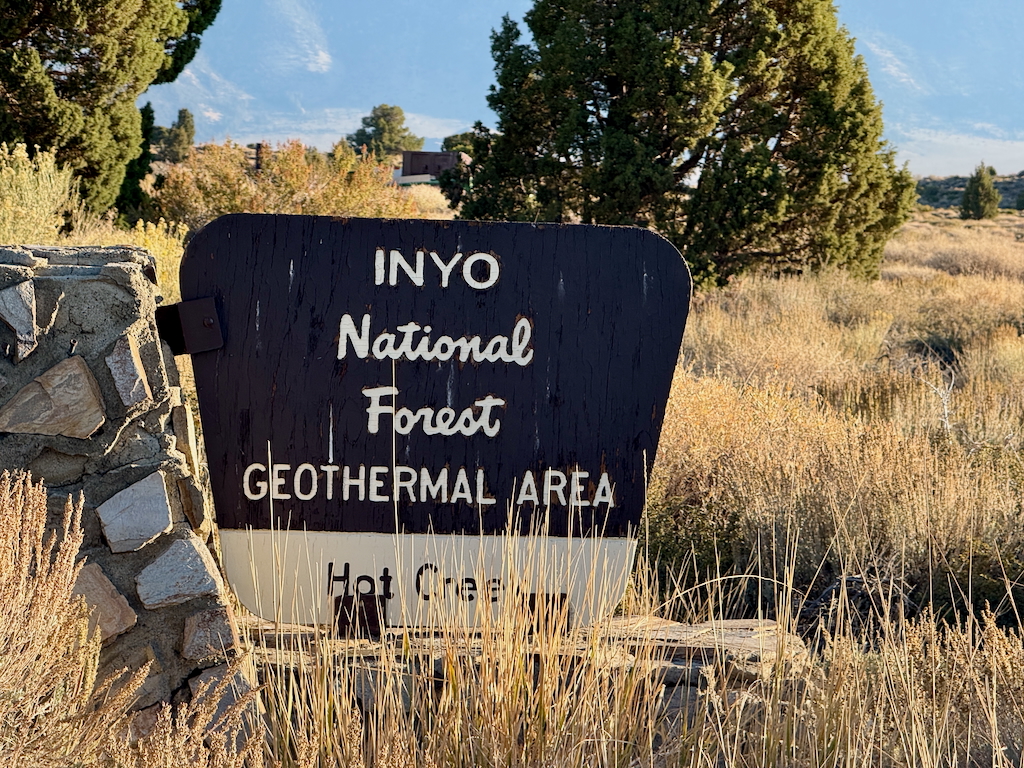
Yellowstone had me hooked, so imagine my surprise when I learned that just a few miles southeast of Mammoth Lakes sits California’s very own “Little Yellowstone.” The locals call it Hot Creek Geological Site, and it’s every bit as wild as it sounds.
@uponarriving This is California’s mini Yellowstone, tucked away in the Eastern Sierra. It’s called Hot Creek, and it sits inside the massive Long Valley Caldera, one of the world’s largest volcanic systems. You can explore it on a one-mile trail that winds along the creek. Parts are loose and rocky, so come prepared for a bit of scrambling. Back in the day, people soaked in these pools — but that’s no longer allowed. The water can erupt unpredictably, and temperatures can spike from warm to over 200°F in seconds. New vents even open up with seismic activity, making it extremely dangerous. Today, it’s a stunning spot to hike, photograph, and experience California’s volcanic side. It really does feel like a taste of Yellowstone — though the sulfur smell isn’t nearly as strong as in Wyoming. For more unique travel destinations, follow UponArriving. . . . #california #mammothlakes #yellowstone #travelblogger #thermalpools ♬ original sound – Daniel | UponArriving
Hot Creek’s geology
Hot Creek sits inside the massive Long Valley Caldera, one of the largest volcanic systems on Earth. About 760,000 years ago, this place quite literally blew its top — blasting out more than 150 cubic miles of material and leaving behind a collapsed basin nearly 10 miles wide and 20 miles long. Think Yellowstone-level drama, but in California.
Related: 6 Things That Genuinely Surprised Me About Yellowstone National Park
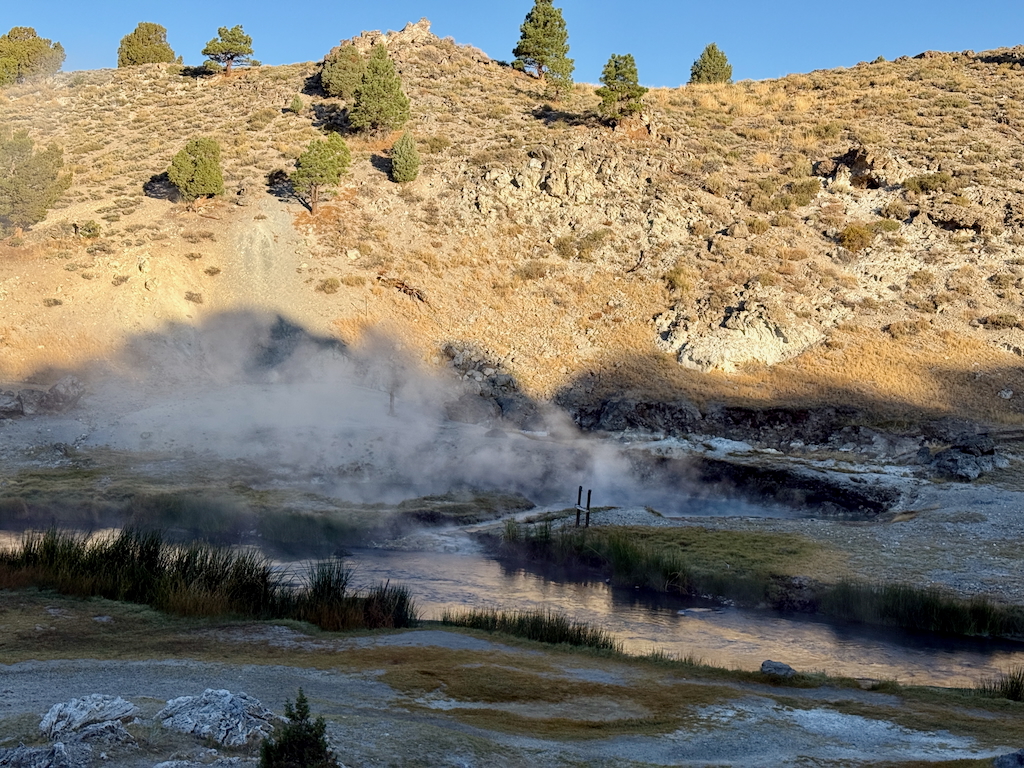
Even though that eruption happened hundreds of thousands of years ago, the ground here hasn’t exactly cooled off. Magma chambers deep below still heat the groundwater, which bubbles back up to the surface as steaming hot springs — and sometimes, if you’re lucky (or unlucky, depending on your timing), a surprise geyser eruption.
One of the coolest things about Hot Creek is how the Owens River slices right through the caldera floor, putting all those hydrothermal features on display. So you end up with a seriously bipolar river: a crisp, cold mountain stream weaving its way through pockets of steaming, mineral-rich water.
Visiting Hot Creek
When you get to the site, you’ll spot a few basics — some bathrooms, picnic tables, the usual park setup. From there, a paved path takes you down toward the river. It drops maybe a hundred feet in elevation, so yes, you’re going downhill, but it’s nothing too dramatic. Unless, of course, you forget you’ll be walking back up later.

Once you’re down by the river, you can follow trails that wind alongside the water. Every now and then, you’ll have to do a bit of route-finding because the paths tend to split — some hugging the banks more closely than others. Technically, the signs say to stay at least ten feet away from the riverbank… but then there are stretches where the only trail is definitely within that ten-foot zone. So, your guess is as good as mine. Either way, the main point is: don’t mess with the hot springs, don’t get too close to the steam vents, and give the river a healthy amount of respect.
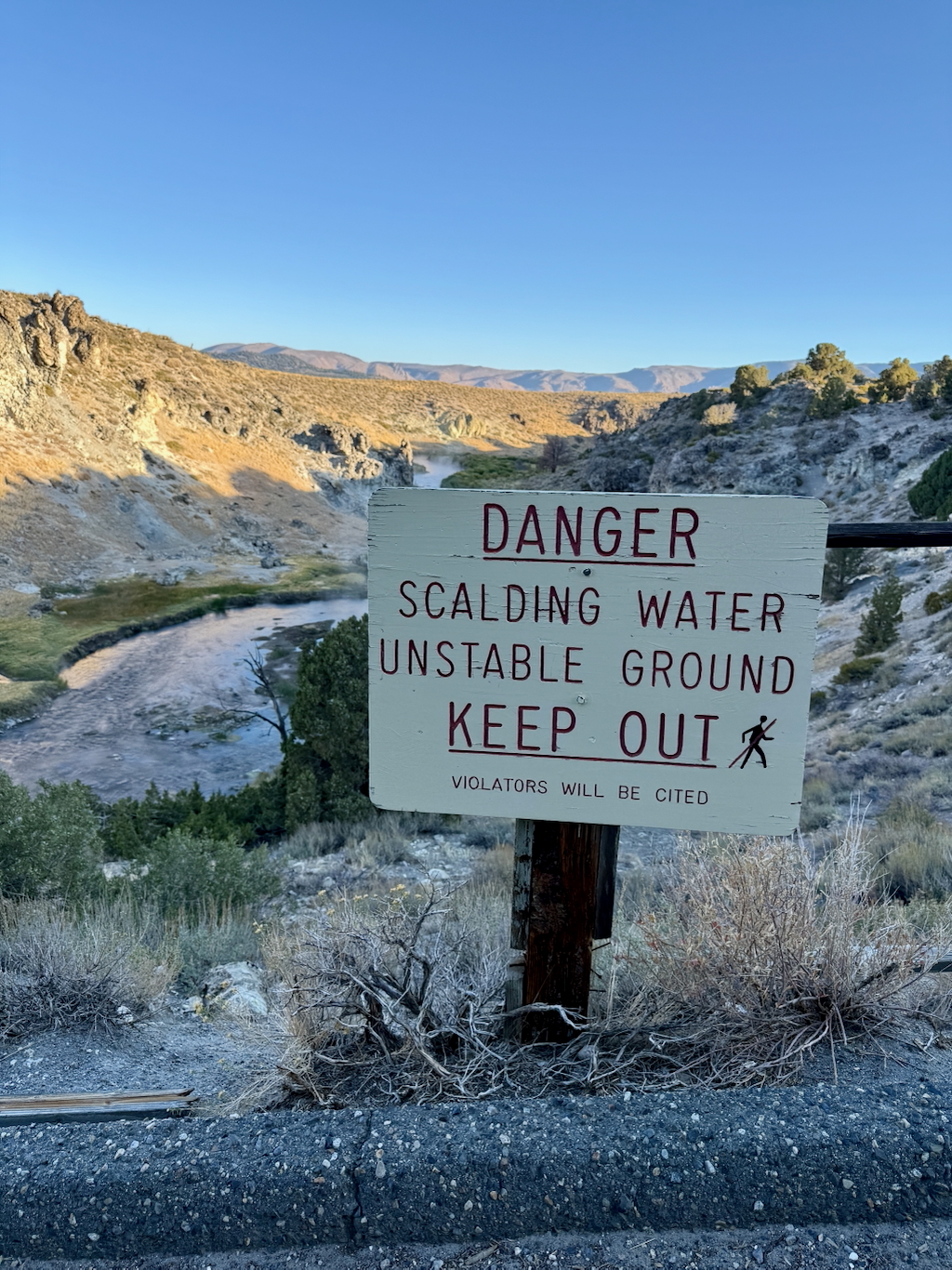
And just to be clear — you really, truly don’t want to get into the water here. The pools might look inviting, but geysers can erupt without warning, and the temperature is wildly unpredictable. One second it’s calm, the next it’s scalding. There are actual reports of people getting seriously hurt, so this is one of those times where “look, don’t touch” is the smart move.
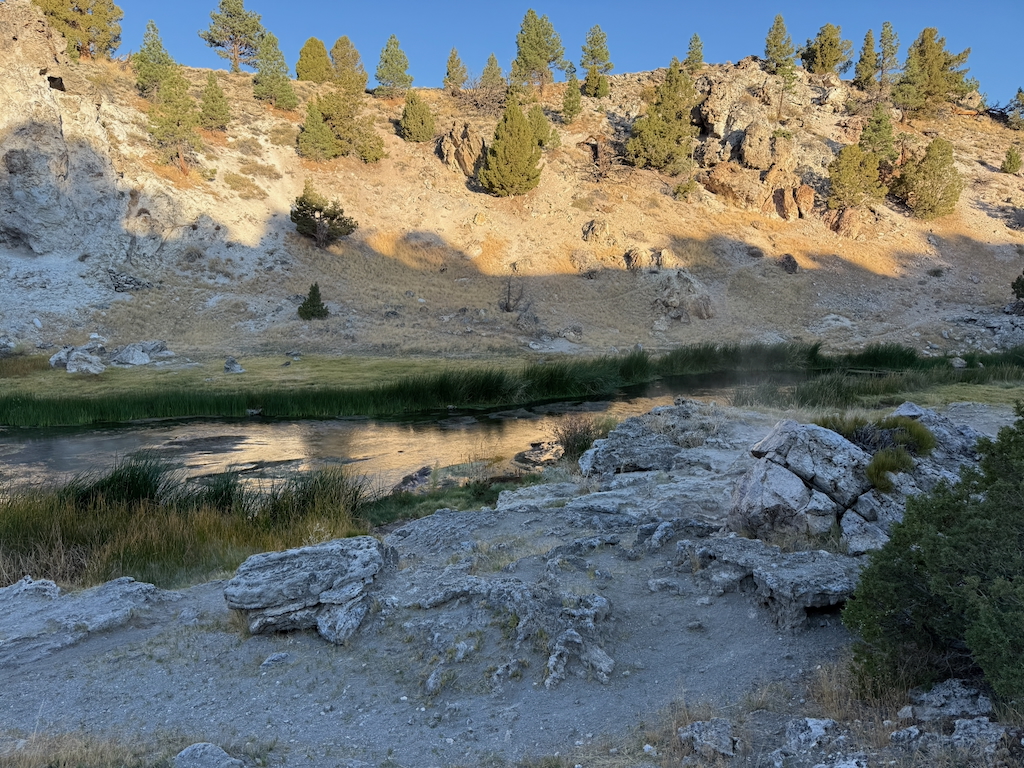
As you make your way along the river, you’ll come across a couple of big rock outcroppings. You can scramble over them if you’re feeling nimble, or usually there’s a slightly more gradual detour to avoid the climb. Just watch out for loose rock — trekking poles are handy here if you’ve got them. That said, most of the trail is pretty mellow and the scenery more than makes up for the occasional scramble.
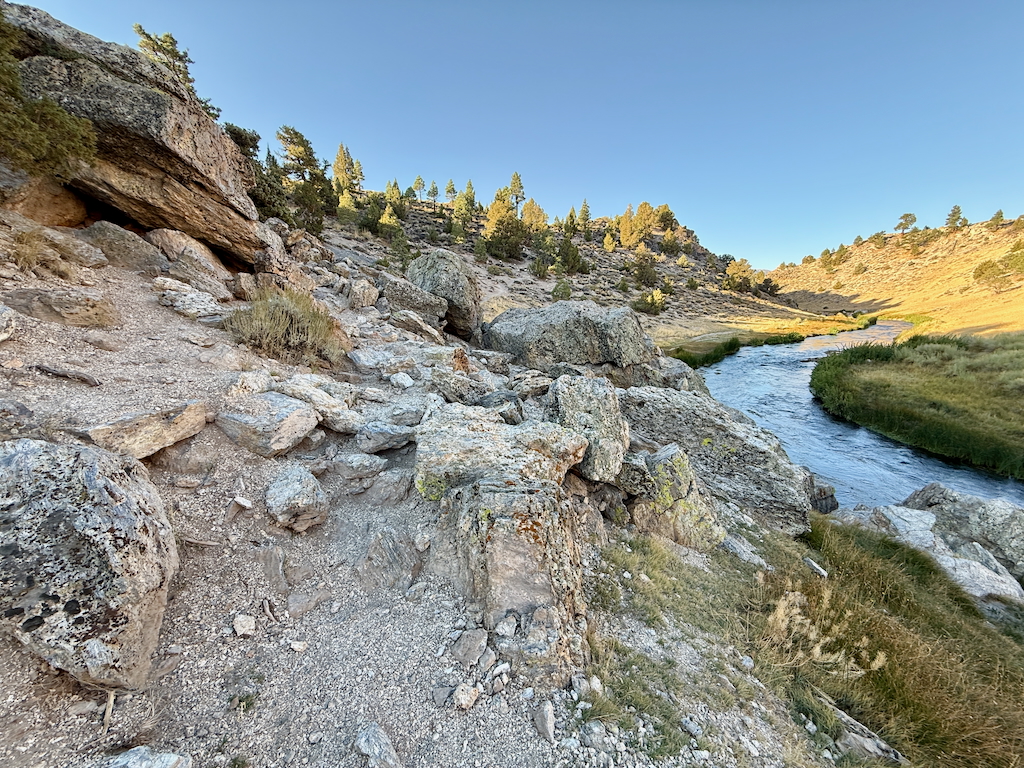
Walking around Hot Creek is an experience in itself. You’ve got steam rising everywhere, which gives the whole place that Yellowstone-like vibe — minus the tour buses. There’s also a faint sulfur smell in the air. Not the full-on rotten-egg punch you get in Yellowstone, but just enough to remind you that, yes, the Earth is literally cooking under your feet.
It’s a beautiful spot to just wander, watch the river, and take in the odd little formations and unexpected patches of vegetation along the banks. And if you’re into fishing, this stretch of the Owens River is actually famous for its trout. I didn’t spot any on my visit, but apparently, anglers love this place — so keep an eye out for them darting through the water.
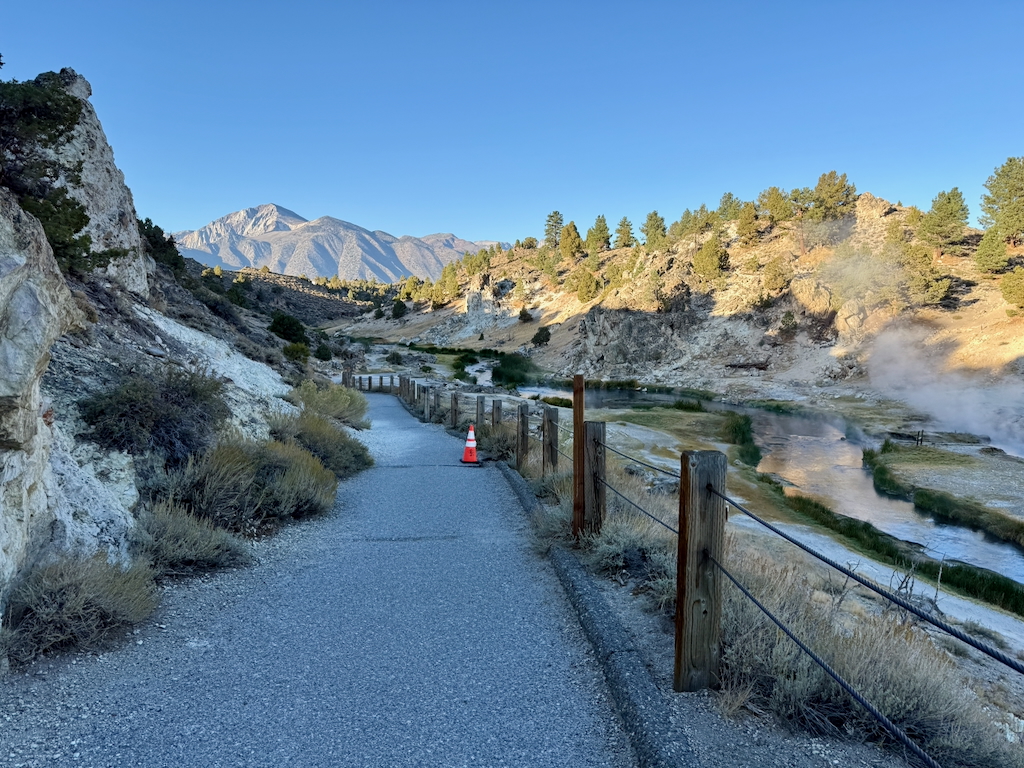
Overall, Hot Creek is just plain pretty. The mountain backdrop is incredible, and the whole place really does feel like a pocket-sized Yellowstone tucked into the Eastern Sierra. We went a little less than a mile in before turning around, which made the whole outing about 1.6 miles with around 300 feet of elevation gain — basically the perfect combo of morning stroll and mini workout.

What struck me most is how dynamic the site feels. I’ve seen photos where the pools glow this almost unreal pale blue, and it seems like no two visits are exactly alike. One day you might catch dramatic steam vents, another day crystal-clear pools. For a spot that’s so easy to reach — and framed by such jaw-dropping scenery — I’d say it’s absolutely worth carving out time to see.

Daniel Gillaspia is the Founder of UponArriving.com and the credit card app, WalletFlo. He is a former attorney turned travel expert covering destinations along with TSA, airline, and hotel policies. Since 2014, his content has been featured in publications such as National Geographic, Smithsonian Magazine, and CNBC. Read my bio.
