
The Misogi (禊) Challenge comes from an old Japanese idea about cleansing yourself — not just physically, but mentally. Traditionally, people would stand under a cold waterfall or step into icy water to wash away the things holding them back. Sometimes for minutes, sometimes for hours.
Today, it’s taken on a new meaning. A Misogi is about doing one big, hard thing each year — something that scares you a little and makes you grow a lot. The idea is to push yourself past what you think your limits are.
People approach Misogi Challenges in different ways, but the main principles are usually these:
- No guarantee of success: If you know you can accomplish the task, it’s not a Misogi. Ideally, the challenge has about a 50% chance of success (or lower).
- A lasting impact: It should leave an impression on you that defines your year, redefining how you see your limits.
- A private endeavor: Most Misogi Challenges are personal — you don’t need to publicize your preparation or journey leading up to it.
- Physical (or not): While many Misogis are physically demanding, it doesn’t have to be physical — it could be writing a book, putting on an event, or tackling any personal goal that scares you.
- You can’t die (last but not least I guess)
What matters is that it challenges you and changes how you see yourself afterward.
This year, my Misogi was a hike.
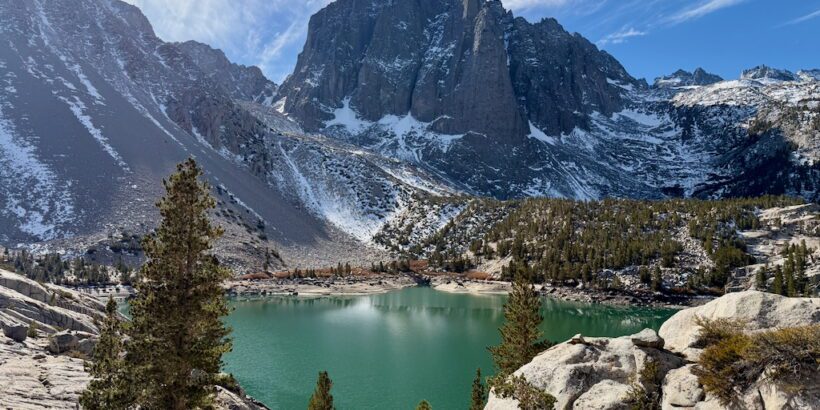
I spotted my dream hike not long after we arrived in Mammoth Lakes for a two-month content stay. It was the Big Pine Lakes Trail and it takes you up to one the most beautiful alpine lakes I’d seen: Second Lake. Some call it “California’s Little Patagonia.” Just look at this thing — it’s gorgeous.

I knew right away it would be epic, but also a serious challenge for me. At 9.5 miles and 2,400 feet, I’d done hikes that were much more daunting but this was a different situation.
Eight months earlier, I’d developed peripheral neuropathy that spread down to my feet. It was quite severe, leaving me unable to stand for more than fifteen minutes at a time. For a while, I truly believed my hiking days were over and being an avid explorer/hiker it was devastating news to say the least. But things soon changed.
Over time, I started to get some control back — thanks in part to the soaking program at The Buckstaff Bathhouse (which I reviewed here). The progress felt incredible, and maybe I got a little overconfident as I started to improve.
Over the summer, I went all in — summiting a 14er in Colorado, weaving through slot canyons in Utah, sometimes knocking out three hikes in a single week. It was actually one of the best summers of my life which is crazy to say considering the situation I found myself in back in February. I would’ve never imagined the year playing out like that.
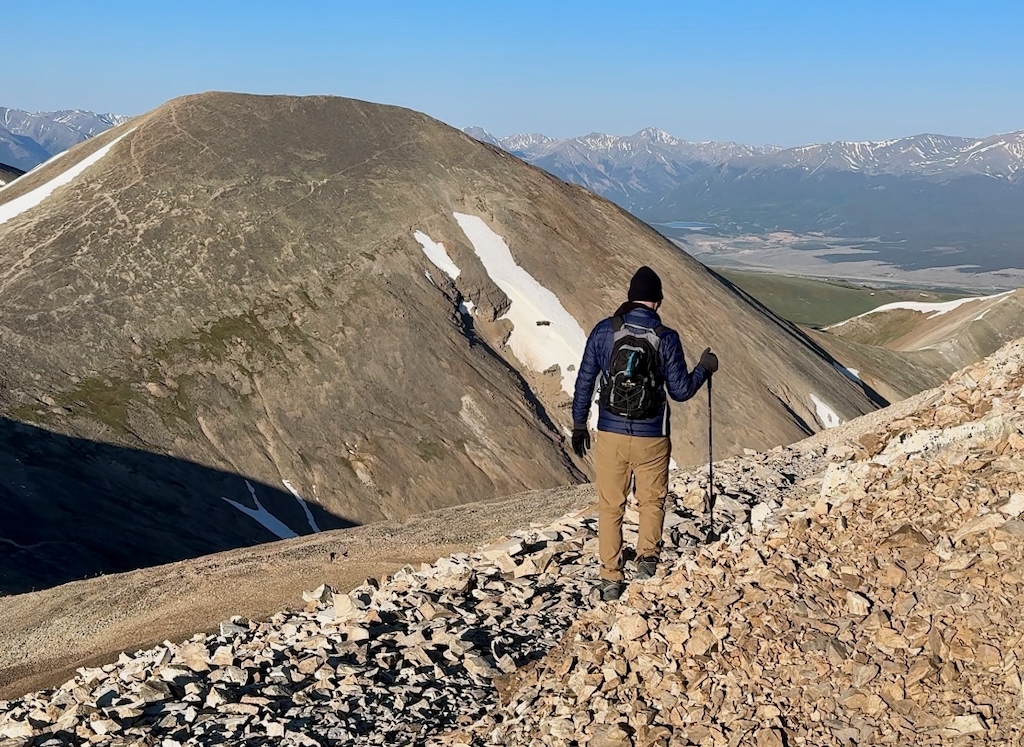
By the time we made it to California’s Eastern Sierra in September, I could sense my body asking demanding for a little relief. So I slowed things down — shorter hikes, morning hot spring soaks, and many outings to chase the fall color change.
It was nice and relaxing. After all, it’s good to take breaks, especially in a place like this.

But still, I couldn’t stop thinking about Second Lake. There’s was just something about that particular alpine view that I was in love with.
As I navigated a spree of neurological flare-ups, the idea kept growing in my mind. I knew deep down this would be my Misogi Challenge for 2025. It would be the biggest and longest hike I’d attempted since being introduced to the neuropathy in my feet.
When we finally set out to do the hike, I felt ready. But a couple miles in, sharp nerve pain hit my left groin. Years ago, I learned where that pain could lead if ignored: utter misery. So this time, I stopped and turned around. It was bitter sweet. On the one hand, there was wisdom and maturity in the decision. On the other hand, there was defeat.
Two weeks later, after countless hours doing awkward hip stretches and Kegels on my rubber mat — the kind that make you look like you’re half break dancing, half twerking — it was finally time to reattempt the hike.
I woke up that morning and instantly felt it: a migraine.
Lately, they’d been hitting me more often, so it wasn’t a shock. But I knew if we went through with the hike, I could be asking for it. Migraines and high elevation hiking don’t tend to mix every well. But this was my Misogi — it almost made more sense to do it with the migraine.
The 1 hour and 15 minute drive to the trailhead was intensely bright. We’d forgotten about daylight savings time! So now we’d be running an hour behind. Not the start I wanted with my headache coming in hot. I slipped on my sunglasses and then just closed my eyes, waiting to arrive.
Hitting the trail
A few minutes into the trail, the migraine-induced nausea kicked in. That heavy, swirling kind that flips your gut upside down and won’t leave. Ten miles of this wasn’t going to be pretty, but I kept moving.
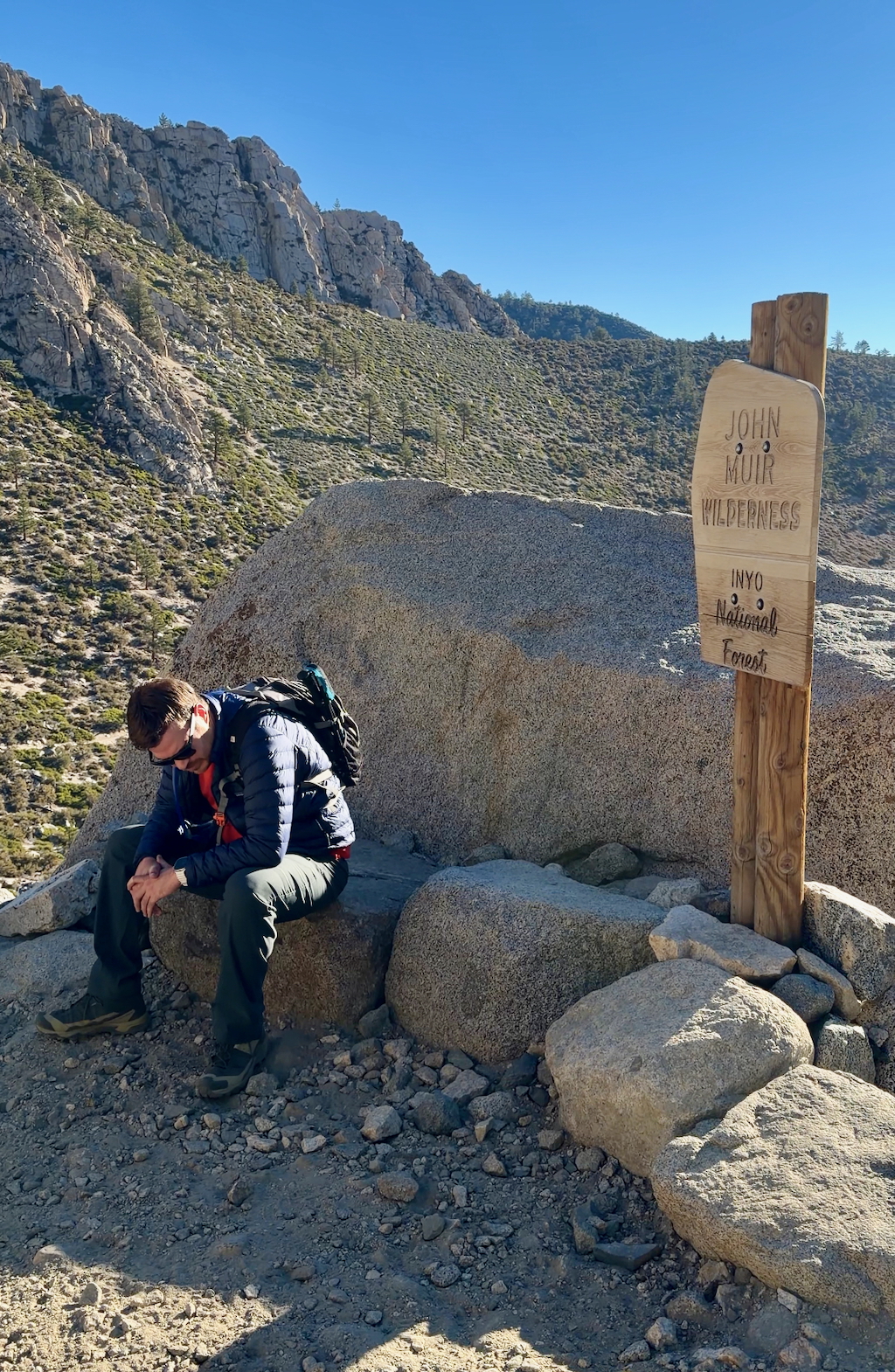
About a mile and a half in, the groin pain hit — bilateral this time, both sides firing. Feeling it again but this time doubled up hit me hard mentally and emotionally. Two weeks of non-strop stretching and pseudo-twerking and now I was somehow worse off? WTF!?
Brad and I went back and forth probably six or seven times on what we should do.
“Let me just test it and go a little farther,” I’d say.
Each time, the pain got sharper and the doubts grew more insistent.
As the pain built, so did the nausea. By the time we were about two and a half miles from the lake, I was struggling way worse than on my failed attempt two weeks prior. Turning back felt like a forgone conclusion. It was surely the rational and safe thing to do.
But I was sick of always weighing risks and outcomes. I didn’t want logic — I wanted will. I wanted to know what would happen if I just kept going. If I just dug deeper and decided that these ailments weren’t going to dictate my day’s outcome. I wanted to find my fight.
So I did.
It was grueling. I stopped more times than I could count. I hocked up vomit twice off the side of the trail. Every step was a mental battle — controlling the pain, fighting the urge to hurl, and stiff-legging my way up the rocky switchbacks.
I was wrecked. But a couple of hours later, we reached the alpine lake of my dreams: emerald-green waters shimmering in the sun, framed by jagged, snow-dusted mountain crags that seemed to reach out to the sky. Heavenly.
I threw off my suffocating puffer jacket, dropped my pack, and just lay there. Here’s a photo of me lying/dying on a rock.

And here’s the Instagram version, of course (every hiker can relate, I’m sure).
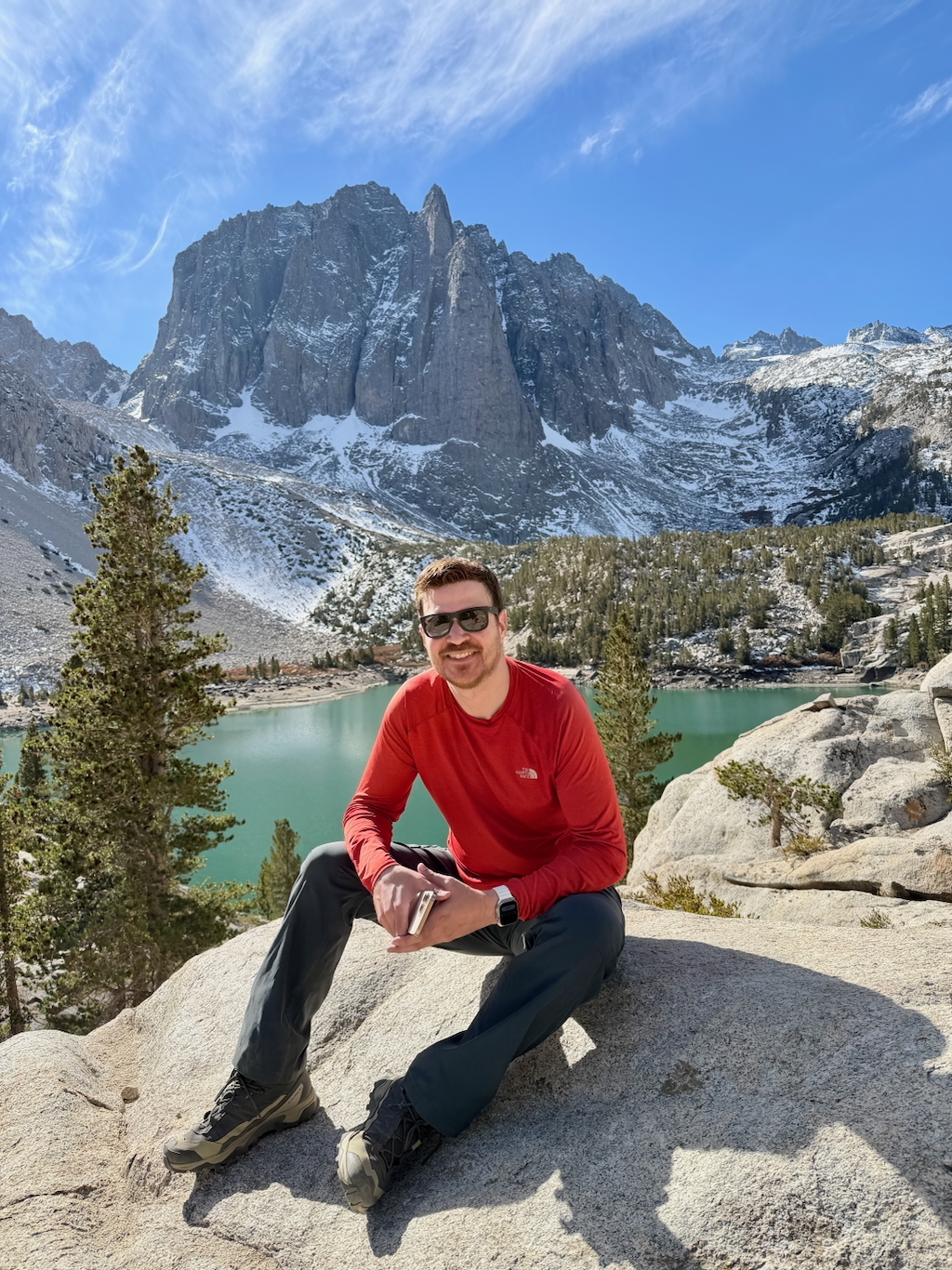
Unlike some hikes where the nausea eases once I reach the top, this one didn’t let up. In fact, the ibuprofen I’d taken might as well have been a little chemical bomb going off in my gut. There was no escaping this feeling anytime soon.
There’s always a moment of unease when you’re deep in the wilderness and feel so utterly depleted and out of sorts, especially if you’re battling some type of unpredictable chronic ailment. This isn’t the gym where you just hop off the treadmill and go home. Five miles from the trailhead, you can’t help but think—what if I can’t make it back? What if I have to get airlifted out? You have to keep your mental game strong.
I leaned on my experience as a hiker to reassure myself I’d be fine, but honestly, it took some faith. I felt about as bad as I ever have on a trail and we’ve done a lot of hiking.
The way down was mostly a battle against two competing urges — to puke or to keel over — neither of which seemed like productive options.
I resorted to many Jedi mind tricks like imagining the oxygen getting richer as I dipped below 10,000 feet. Inner pep talks. Prayer. Counting steps. Anything I could do to distract myself from the all-consuming agony.
I was too nauseous to drink more than a sip or two of water, and dehydration started setting in those last four miles. When I did take those baby sips, I could feel the water swishing in my stomach (a weird side effect of migraines is slowing digestion).
The groin pain kicked in on every big step and awkward creek crossing. Mud and ice patches didn’t help. I focused on small goals—just get to the next landmark. A waterfall. A random cabin in the woods. A grove of leafless aspens. I’d squat on rocks in the shade when I could, but even then, I could feel my neuropathy making my legs give way. A clock was ticking.
Somehow, I made it back down to the final stretch that followed a gushing creek.
We came across a group of hikers blocking the trail who asked us to deliver a message to a guy in a blue hat: “Hurry up.”
A few minutes later, we found him lounging on a rock, smoking. When Brad passed along the message, he couldn’t have cared less. While this guy sat there without a care in the world, I was fighting off dry heaves and a touch of delirium. I only had a few hundred feet left, but it felt impossible to move without hurling.
Still, I dug deep for that final push — and then, through the trees, I caught the first glint of sunlight reflecting off our Jeep. It looked absolutely heavenly.
Truth be told, besides the first five minutes, there was really nothing enjoyable about this hike. The views were absolutely stunning, sure, but it was 5.5 hours of pure, unrelenting discomfort.
Still, for my once-a-year Misogi, it immediately changed how I think about my limits.
I realized there are two limits to everything: the objective limit of what our body and mind is capable of, and the limit we perceive for ourselves. In between this gap is where we come into contact with our fight — that raw, electric force of adrenaline, defiance, and willpower that surges up when every rational part of you wants to quit.
And there’s something miraculous about discovering this fight. No matter how much is stacked against you or how impossible the path seems, that fight becomes the only thing in the world that matters. When you tap into it, you find you can endure far more than you ever thought possible.
And when you do, something shifts. You see a new side of yourself — one you didn’t know existed. There’s a strange calm that comes with it, a clarity born from exhaustion and grit, when you realize what’s been hiding inside you all along — that you are scarily capable.
That’s why I tell people to take on these kinds of challenges. Step out of comfort. Even if you fail, you’ll walk away with something worth keeping. (And if you do fall short, you can always try again — or at least I think that’s how the rules work.)
Would I ever want to hike like that again under the same conditions? Probably not. Who am I kidding — definitely not. But maybe someday, it’ll be exactly what’s needed and if that’s the case….

Daniel Gillaspia is the Founder of UponArriving.com and the credit card app, WalletFlo. He is a former attorney turned travel expert covering destinations along with TSA, airline, and hotel policies. Since 2014, his content has been featured in publications such as National Geographic, Smithsonian Magazine, and CNBC. Read my bio.
