
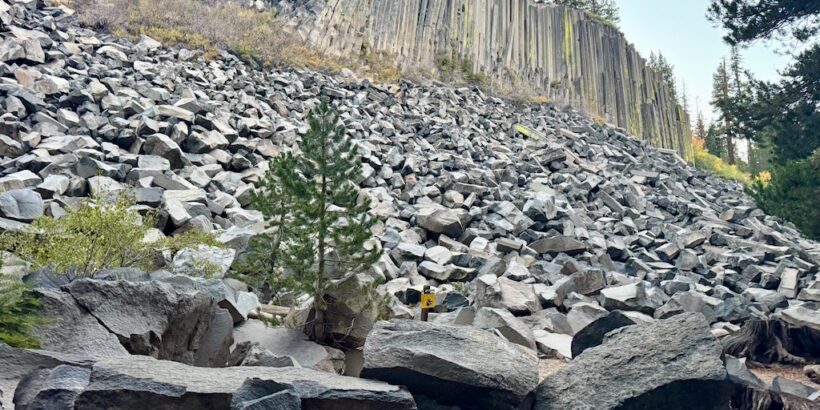
Devils Postpile National Monument is one of the most fascinating geological sites in the Mammoth Lakes region—just one of several natural wonders packed into this area.
It had been on my list for a very long time, so I was genuinely excited to finally see it in person.
And lucky for us, we made it in on the very last day of the season, just barely squeezing it into our itinerary. Here’s everything you need to know about visiting Devils Postpile and what our experience was like.
Devils Postpile National Monument Geology & History
Devils Postpile is believed to have formed from a lava flow roughly 80,000 to 100,000 years ago.
As the lava cooled, it contracted and cracked, creating the geometric columns of columnar basalt you see today. These are considered some of the best examples of basalt columns anywhere on Earth—some rising as high as 60 feet.
But why are they so smooth on top? The answer is glaciers. It was glaciers that sheared off the tops of these columns, leaving behind the smooth, polished surfaces that make the site so distinctive today.
The monument was almost destroyed at one point, so we’re lucky to admire it now.
Different sources mention different plans—some say the basalt columns were targeted for railroad ballast, others say the goal was to build a dam in the area. Whatever the exact proposal was, the site was seriously threatened. John Muir’s advocacy played a major role in stopping those plans, and thanks to that push for preservation, Devils Postpile was designated a national monument in 1911 under President William Howard Taft.

Getting into the park
You do need to be familiar with the logistics before visiting this place.
If you’re visiting during normal hours, you’ll need to take the paid shuttle into Devils Postpile. Last I checked, it was $15 per adult, but here’s the breakdown:
- Day pass: $15/adult, $7/child (ages 3–15)
- Three-day pass: $30/adult, $14/child (ages 3–15)
- Season pass: $75/adult, $35/child (ages 3–15)
- Children 2 and under: ride free
You can even bring your dog, as long as they’re well-behaved, leashed, and muzzled. If you don’t have a muzzle, you can grab one at pet stores in Mammoth Lakes or at the Mammoth Mountain Adventure Center where they sell the shuttle tickets.
There’s a little hack to save money if you get there early. Arrive before 7am and you don’t have to use the shuttle. You’ll have to pay $10/vehicle when exiting (or show a pass) but that’s a lot cheaper than the shuttle for families.
We visited on a very cold morning—low 20s—and it was honestly tough to enjoy at first because of how sharp and stinging the cold felt. Still beautiful, but so so cold. Keep the elevation in mind when planning your visit; temperatures can drop fast, especially in the later weeks of fall.
Just be aware that you’ll need to take the shuttle unless you arrive early enough to drive in. The shuttle only operates during the main season—basically June through late October—so winter access is a whole different situation. You won’t be able to visit by car once the road closes; you’d need a snowmobile, cross-country skis, or some other form of over-snow travel.

Once you arrive, a short trail leads you to the base of Devils Postpile.
It’s just under half a mile each way. Our total route was about 1.2 miles because we included the trail that climbs to the top of the formation. You gain a little over 200 feet of elevation, so it’s not too strenuous, but if you’re not used to inclines—especially at high elevation—it might feel tougher than it looks on paper.
Before you get to the top, there’s what I think is the most fascinating view which is basically a wall of the postpiles sticking out sideways like straws.

When you reach the top, it’s absolutely worth it. You get a beautiful view of the river below and can see far into the distance. When we visited, the sun was rising, which made everything look incredible… even though it was still brutally cold.
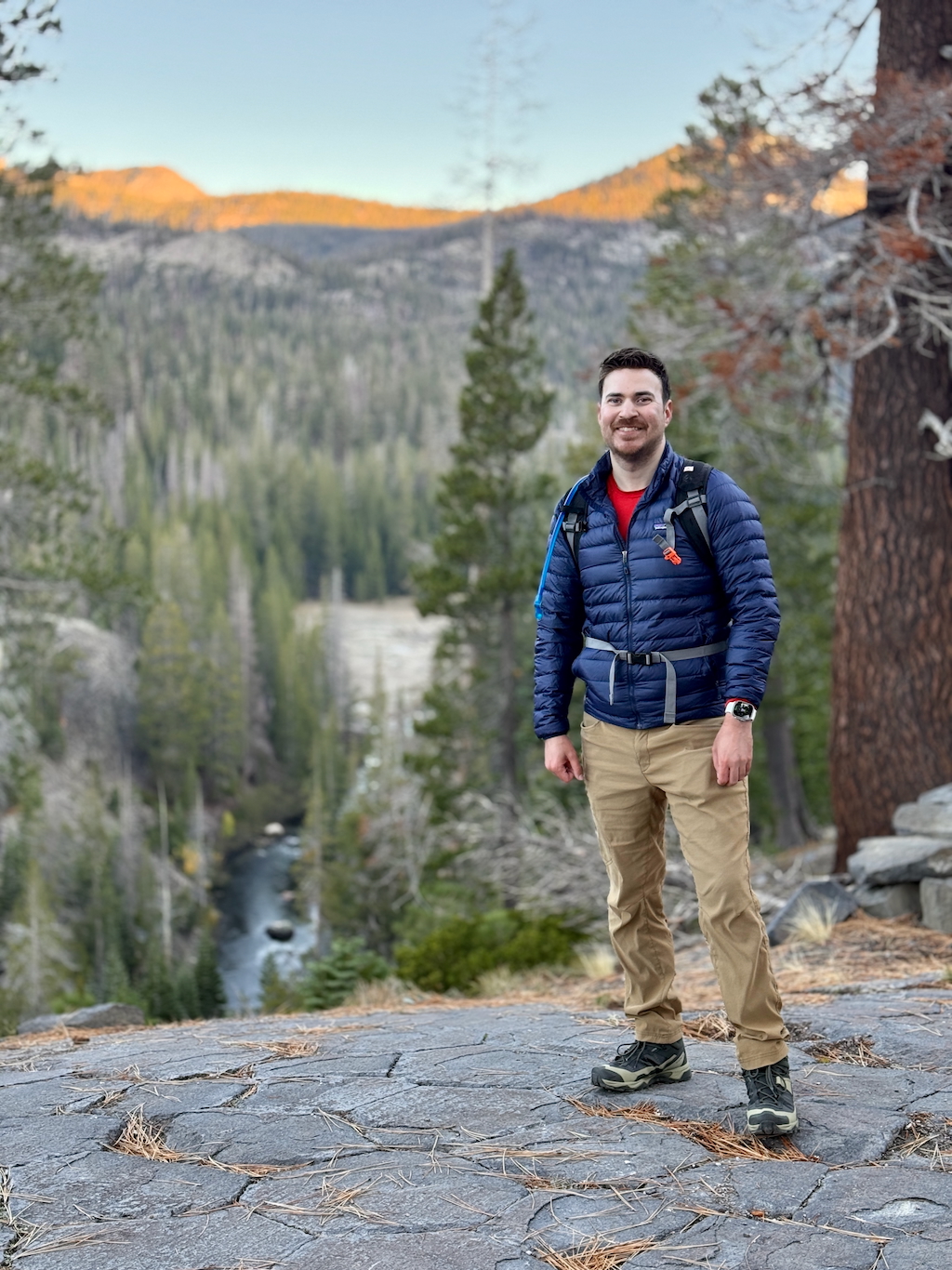
Up top, the columns are especially striking. You can stand right on them and see the geometric shapes up close—many are hexagons, while others have five or seven sides. It’s pretty mind-blowing that nature can form something so precise.


From the top, you take a short loop down a different path, and before you know it, you’ve completed the whole experience.

After exploring the main formation, there’s more to see nearby. There’s a scenic picnic area, and if you go near the bridge, you’ll spot some smaller postpiles a little farther from the monument—still interesting to see them in different areas, even if they’re much smaller.
One of the most popular nearby hikes is to Rainbow Falls. It’s about a five-mile round-trip with minimal elevation gain, making it very doable, and the waterfall itself is stunning. We didn’t have time to visit, but from the pictures and videos, it’s clear why it’s a favorite.

Part of the trail actually runs along the Pacific Crest Trail, which is a cool detail—you’ll see signs for it while you’re there.

Overall, if you’re not particularly outdoorsy, you might glance at Devils Postpile and think, “Okay, that’s neat.” But if you appreciate nature and geology, it’s fascinating. I definitely did. It reminded me a lot of Devil’s Tower in Wyoming—though that formation is much more dramatic, abruptly towering over the horizon.
Devils Postpile is different because you can actually climb on top and experience it from above. The way the columns spill down the slope almost looks like nature poured them out across the mountain. Or like some have described: “it looks like hair.”
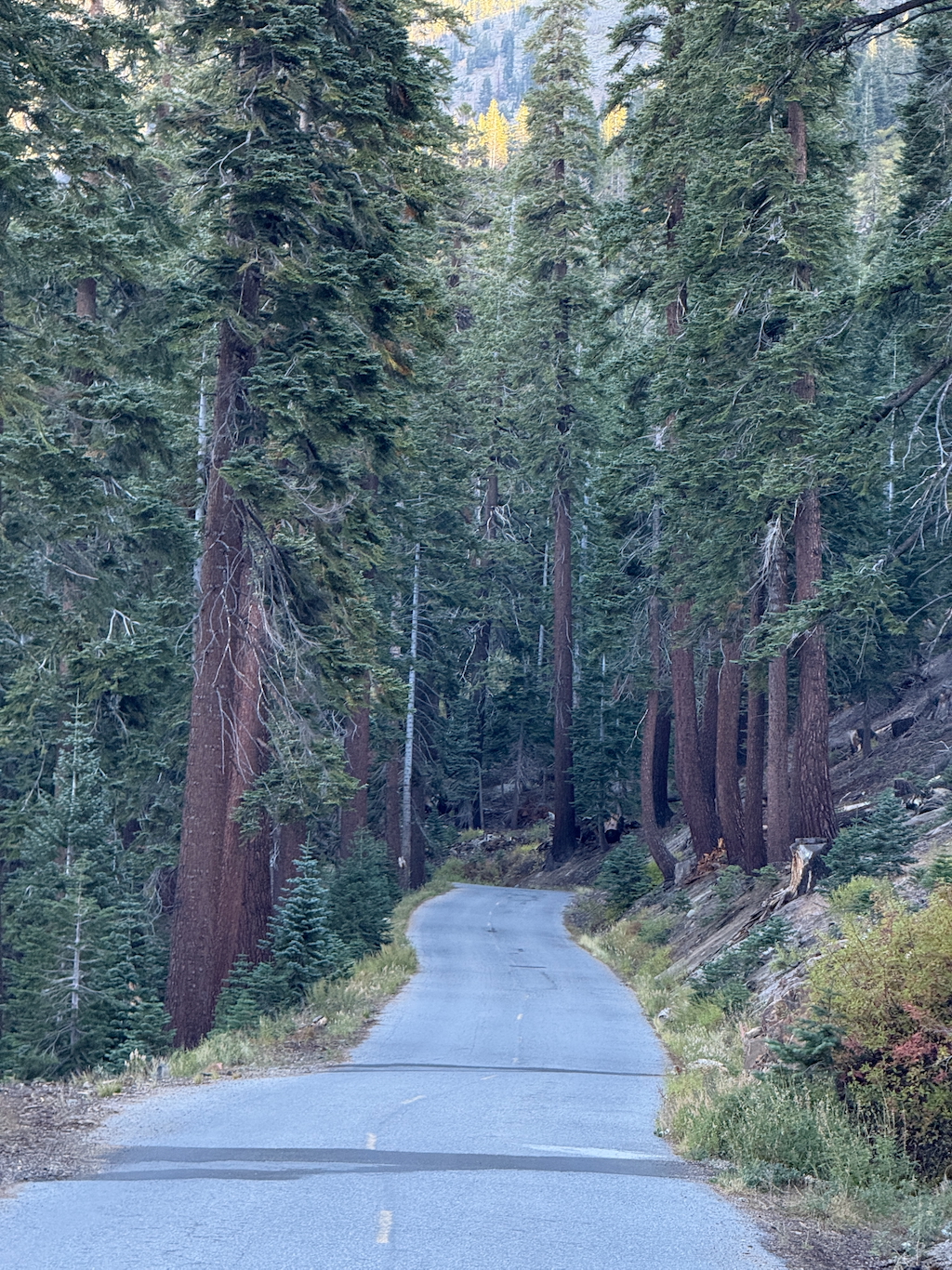
Another highlight is the drive over to Devils Postpile—it’s incredibly scenic. You’ll pass through an old-growth forest with towering trees and enjoy some great views along the way. The road is currently being updated, likely to make it safer and reduce maintenance needs during winter storms, ice, and snow. Even as it is, it’s already a beautiful drive.
This makes Devils Postpile a perfect morning or half-day trip. If you decide to hike to Rainbow Falls as well, you’ll need a bit more time, which I personally recommend if you can fit it in.
Overall, this is a fantastic place that’s absolutely worth visiting. Whether you’re a geology buff or just love being in nature, Devils Postpile is a site you won’t want to miss.
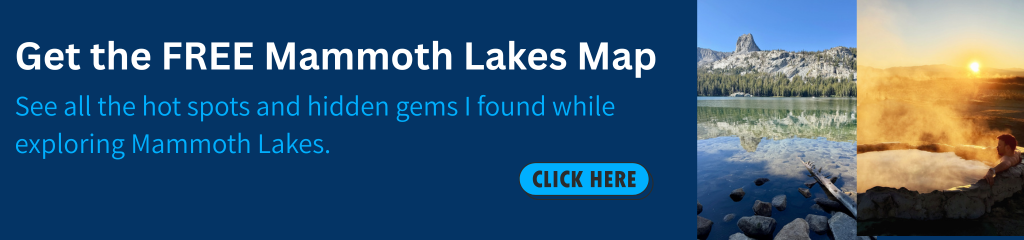
And if you want to make the most of your trip, you can get a free map that shows all the hotspots and hidden gems in the area—perfect for exploring like a local!

Daniel Gillaspia is the Founder of UponArriving.com and the credit card app, WalletFlo. He is a former attorney turned travel expert covering destinations along with TSA, airline, and hotel policies. Since 2014, his content has been featured in publications such as National Geographic, Smithsonian Magazine, and CNBC. Read my bio.
