
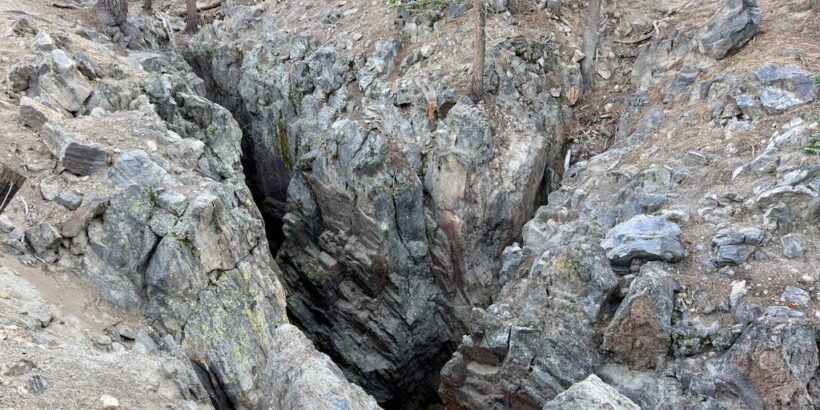
Every now and then, you stumble into one of those unexpected geological surprises when you’re exploring a new place—and that’s exactly what the Earthquake Fault was for me. It’s this striking, slightly eerie crack in the landscape that’s worth a stop when you’re in Mammoth Lakes. It’s easy to check out, easy to get to, and surprisingly mind-blowing when you’re standing right next to it. Here’s what to know.
Earthquake Fault’s geology and history
The name “Earthquake Fault” is a little misleading—this isn’t a true fault line. It’s actually an earthquake fissure that cuts straight through volcanic rock, part of a glassy rhyolite lava flow from Mammoth Mountain. It likely formed from tectonic stresses in the Earth’s crust, not from the kind of plate-boundary faulting the name suggests.
The fissure itself stretches up to about 10 feet wide and drops roughly 60 feet down. No one knows its exact age, but it’s believed to be only a few hundred years old—which is surprisingly young in geologic terms.
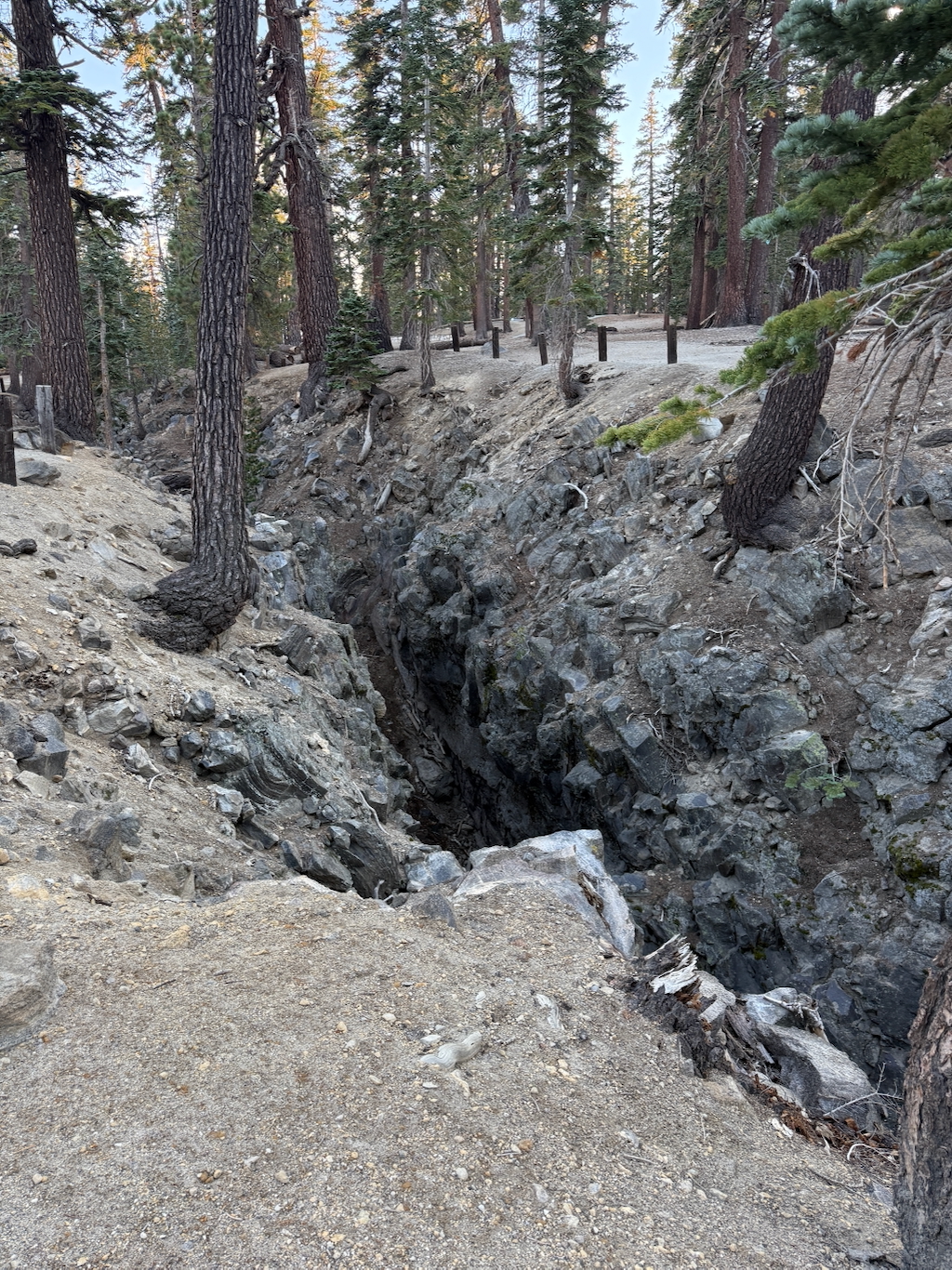
The best part is you don’t need to do much to see it. It’s an easy stop, and you can walk right up to the edge for a close look at this unusual slice through volcanic history.
Getting to Earthquake Fault
A great part about this site is you don’t need to do much to see it. The fissure is located just outside town, only a short drive from the center of Mammoth Lakes — roughly 5 to 10 minutes depending on traffic. It’s an easy stop, so there’s no excuse for missing it!
From the parking lot, it’s a very short walk to the fault and if you need to relieve yourself there is a bathroom.

When you head out, just make sure you start on the right trail. There’s one called the “Earthquake Fault Parking Connector” that actually leads to a mountain biking route and takes you uphill. Skip that one—you could end up following it for a long time without ever reaching the fissure.
Instead, take the paved path that heads slightly downhill. You should see sign for the Earthquake Fault. It’s only about 0.1 miles before you reach the main trail to the fault.

Exploring the area
The area itself is gorgeous. You’ll be walking through stands of red fir and cream soda-scented Jeffrey pine—tall, old-growth trees that give the whole place a peaceful, forest-cathedral vibe. It’s worth a visit for that alone.
There are picnic tables scattered around too, making it a great spot to linger. On a sunny afternoon, with the light filtering through the trees and those fresh forest scents in the air, it’s an especially nice place to slow down and enjoy the surroundings.
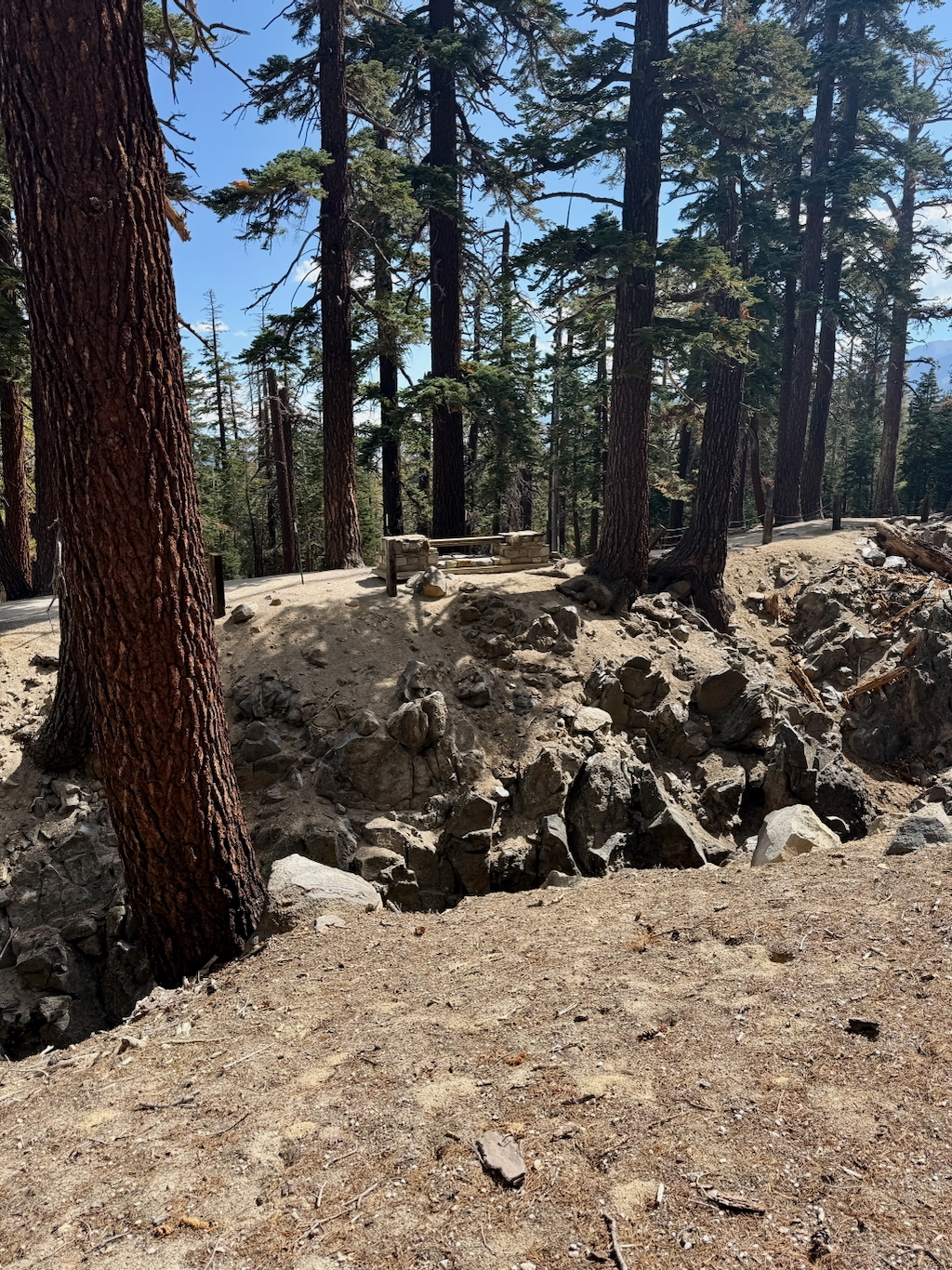
The trail forms a loop that takes you right through sections of the fissure. In a few spots, there are steep sets of steps built into the rock, so be ready for some uneven footing. If you’re not the most sure-footed, take your time—it’s easy to slip if you’re moving too quickly.
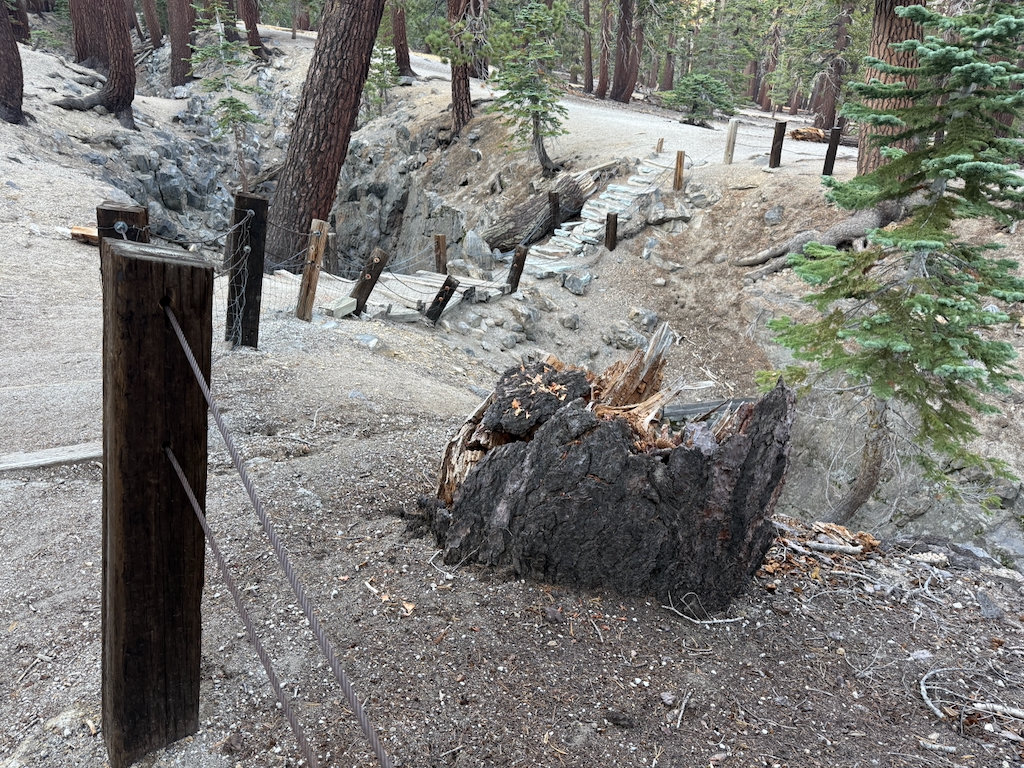
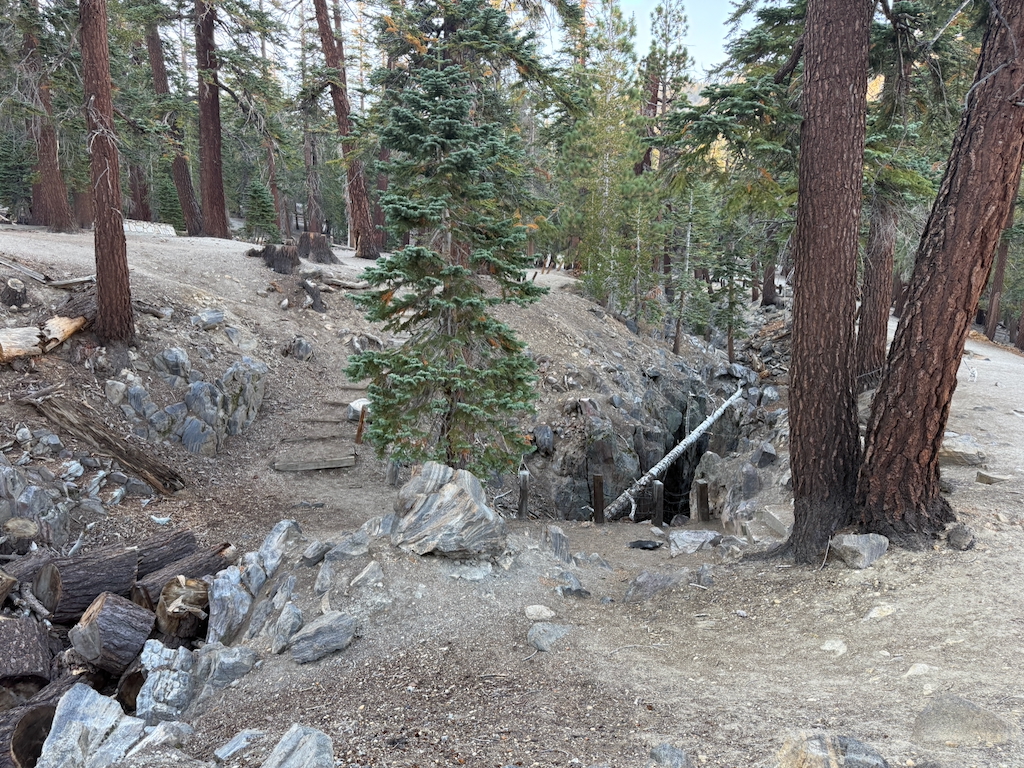
If you’re visiting with kids, keep a close eye on them. There are railings in the main viewing areas, but there are also sections where the edges are more exposed. A small child could easily wander too close and take a dangerous fall, so it’s worth staying alert as you explore.

Otherwise, it’s a pretty easy walk around the fault. You can peer straight down into it, and there’s something undeniably eerie about staring into this giant crack in the earth. It almost gives off an apocalyptic vibe—like you’re seeing, firsthand, just how powerful the planet really is. You might feel that same little jolt of awe.

What makes it especially cool is that the trail lets you crisscross around the fissure and view it from different angles. Each viewpoint feels a little different, and it really drives home how dramatic this feature is up close.
If you look closely, you can actually spot places where the rock on one side lines up with the rock on the other—almost like matching puzzle pieces that were pulled apart. It’s a fun little detail to look for and makes the whole thing feel even more surreal.

Depending on when you visit—especially in early summer—you might still see patches of snow or ice at the bottom of the fissure. The sun barely reaches these lower spots, so the ice can linger for months. Interestingly, Native Americans and later pioneers would actually use that ice as a natural cooler. Some accounts even say the pioneers made ice cream with it, which is a pretty fun piece of history to imagine while you’re there.
Otherwise, you’ll probably just find yourself wandering through the forest. If your main goal is to see the fault, you could easily do it in 15 minutes. But it’s worth lingering a bit—to soak in the scenery, stroll among the trees, and just enjoy the peaceful forest atmosphere. All in all, it’s definitely worth a visit, especially since it’s so close to town and so easy to get to.
After you finish walking the loop, you can continue a little way down the road you came from and you’ll spot a turnout with plenty of space to pull over on Minaret Road.
From there, you get another perspective of the fault—an open view that lets you take it all in from a different angle. It’s a nice way to cap off the visit. If you happen to have a drone this is a great place to get some aerial shots, especially because you won’t be disturbing visitors at the main site who would probably prefer some peace and quiet.
By the way, if you loved visiting the Earthquake Fault and want to discover more of the geological wonders around Mammoth Lakes, be sure to grab my free map—it shows all the spots I explored and makes planning your adventure super easy.

Final word
Whether you’re a geology buff, a nature lover, or just looking for a quick, memorable stop near Mammoth Lakes, the Earthquake Fault delivers. It’s one of those rare places that’s easy to visit but leaves a lasting impression. Take your time, breathe in the forest air, peer into the fissure, and enjoy a little reminder of just how powerful—and beautiful—our planet can be.

Daniel Gillaspia is the Founder of UponArriving.com and the credit card app, WalletFlo. He is a former attorney turned travel expert covering destinations along with TSA, airline, and hotel policies. Since 2014, his content has been featured in publications such as National Geographic, Smithsonian Magazine, and CNBC. Read my bio.
