
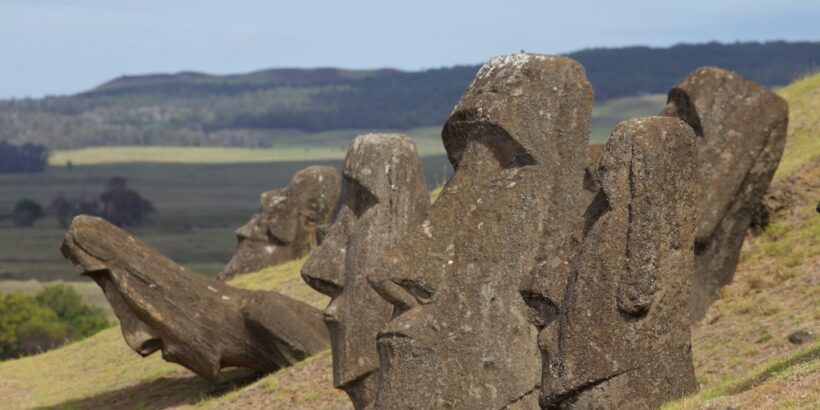
You’ve probably seen the Easter Island heads before—they’re known as moai, and they’re one of the most iconic images in the world. The emojis are everywhere. They show up in pop culture, movies, TV shows—once you start noticing them, you’ll see them everywhere.
What’s incredible is that you can actually visit the place where almost every single moai was carved. This place is Rano Raraku, a volcanic crater on the eastern side of Easter Island. The crater was formed from consolidated volcanic ash, also known as tuff, and you can think of it as the birthplace of the moai.
Rano Raraku itself is striking—its outer slopes shift between steep cliffs and gentler inclines, and at its center sits one of the island’s three freshwater crater lakes. It’s surreal to stand here, surrounded by unfinished statues, and imagine the artistry and effort it took to carve each one.
How to explore Rano Raraku
In order to visit Rano Raraku, you’ll need to go with a guide (most spots on the island require you to have a guide with you at all times).
Most visitors book a local guide who takes them to several key sites around the island (an all day affair). In my opinion, this is the number one place you have to see. Every guide should put Rano Raraku high on your tour itinerary but it’s a good idea to verify that.

When you arrive, you’ll likely pass a few small stands selling souvenirs and local crafts before entering the site.
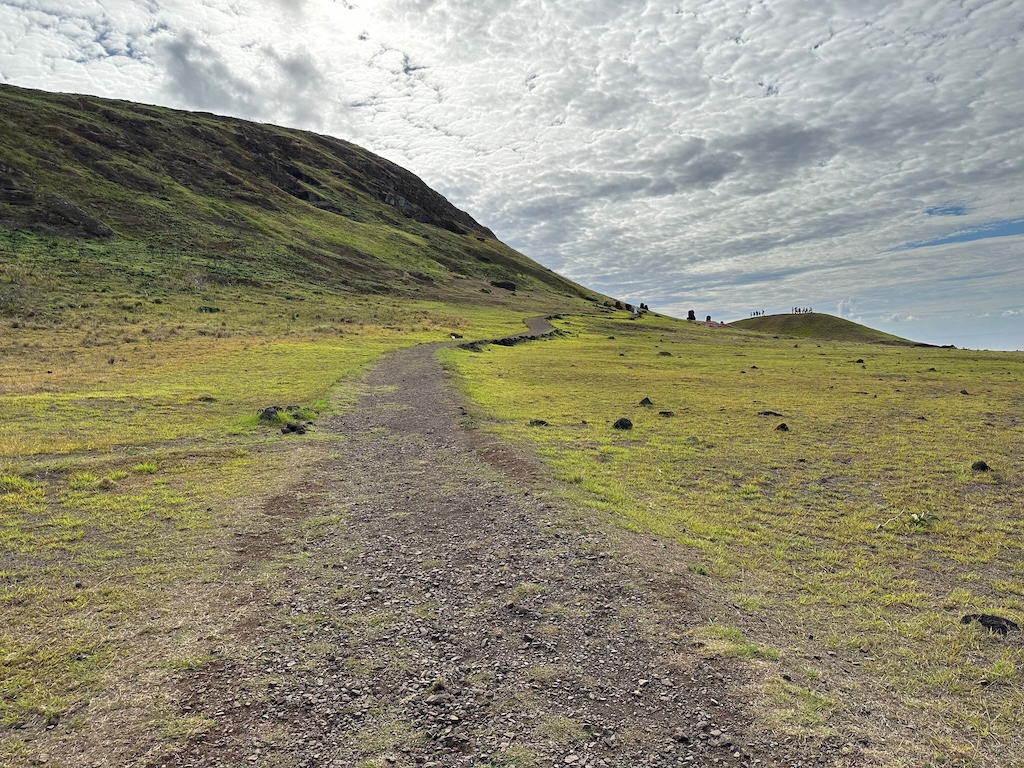
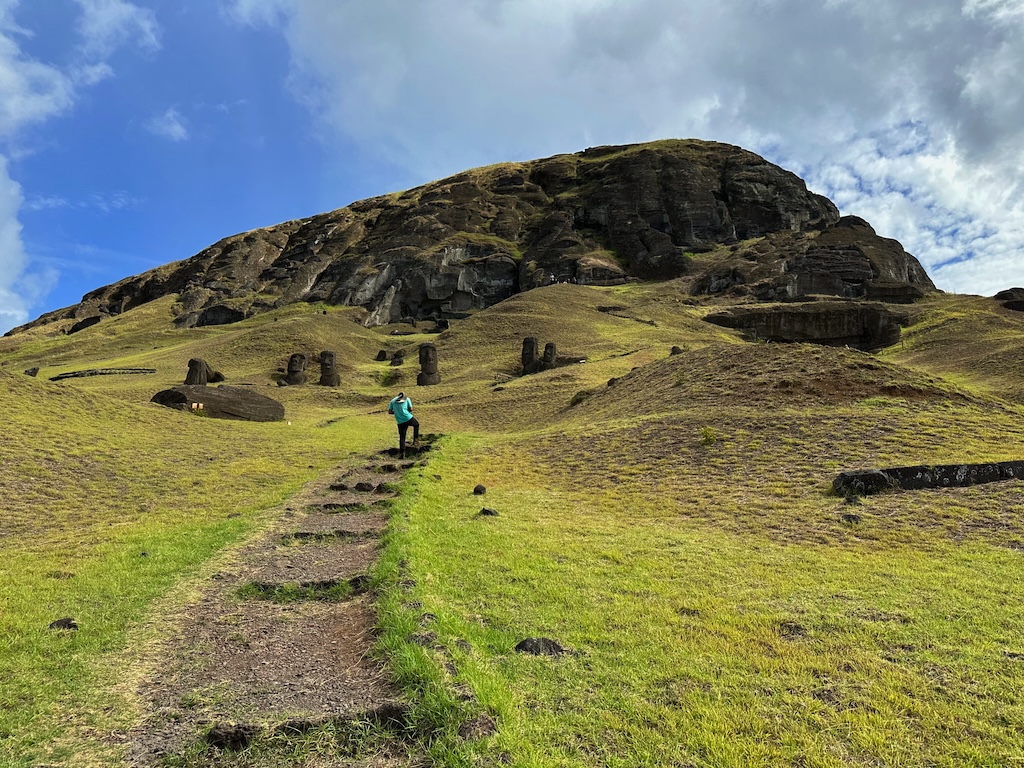
From there, a marked path leads you uphill—not a difficult climb, just a gentle incline—and brings you right up close to the moai. It’s one of the best places on the island to see them at eye level and appreciate their scale.
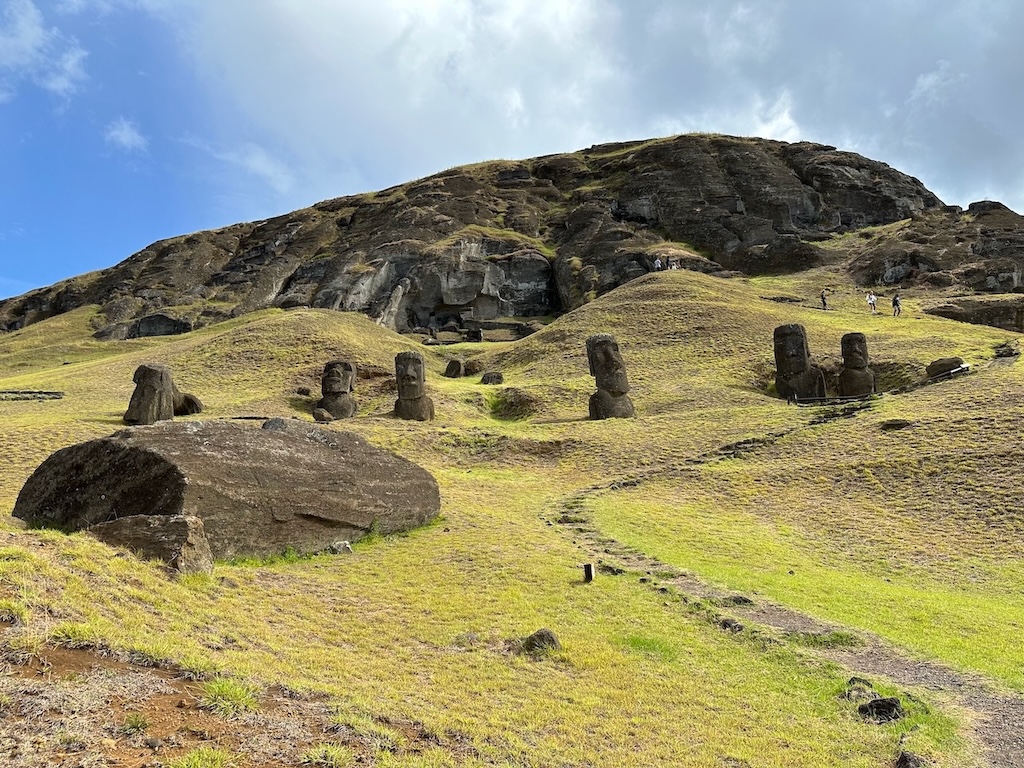
When you first start along the trail, you’ll reach what is probably the most iconic viewpoint of the moai. These are the statues you’ve seen in countless photos—the ones buried up to their shoulders, with only their heads prominently visible. Their bodies are actually intact beneath the ground, but over time soil and debris built up around them, leaving just the upper portions exposed.
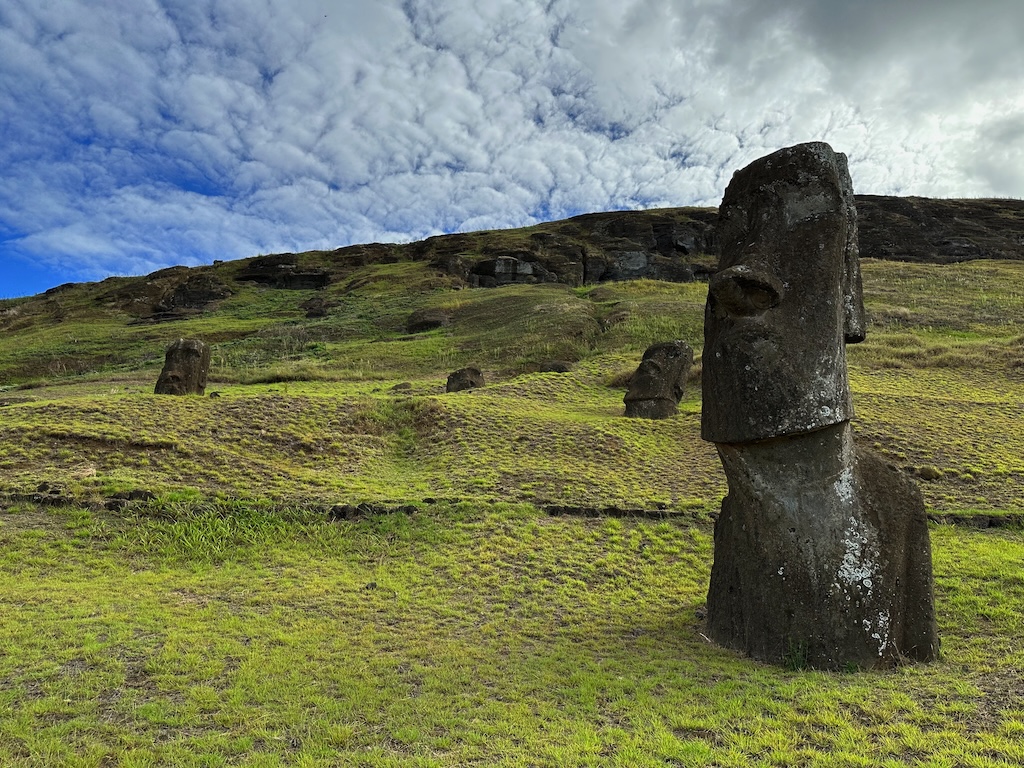
This partially buried look is what sparked the popular misconception that the moai were only heads. There’s even a whole internet storyline about people “discovering” that the statues have bodies. But historically, people always knew that as early explorers documented full-bodied moai in other parts of the island. So the idea that anyone seriously believed they were just heads doesn’t really make much sense. But that’s a story for another day….
You’ll be able to get incredibly close to the moai here, and then wander around at your own pace. It’s an amazing spot for photos—honestly one of the most beautiful places on the island.
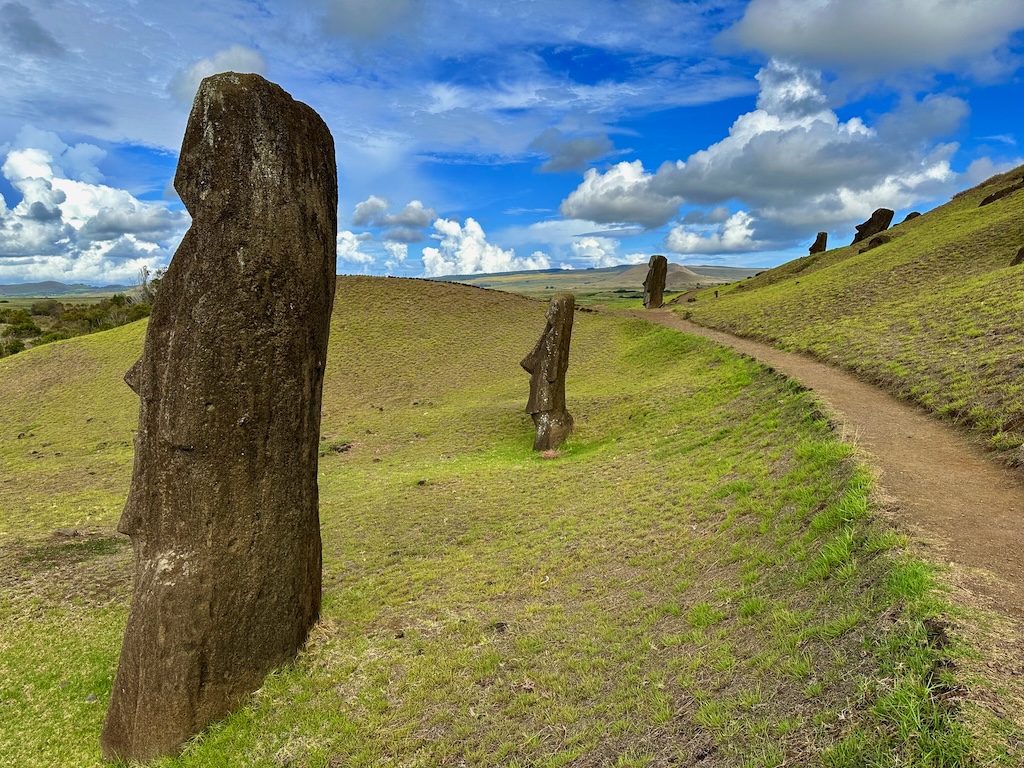
A few things really stand out at Rano Raraku.
One of the coolest is seeing moai in different stages of production. Some were abandoned early on because the carvers hit patches of tuff that were too hard to work with, so they simply left those statues unfinished. You can literally see the “works in progress” frozen in time.
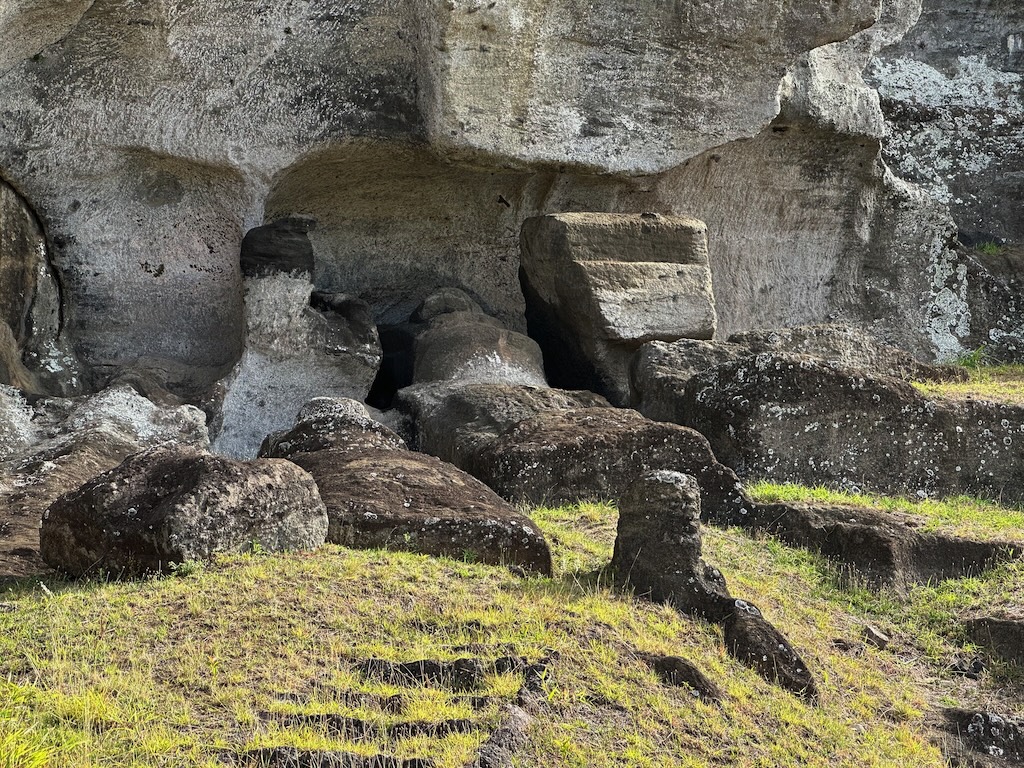
You’ll also find “El Gigante,” the Giant—an unfinished moai that would’ve been about 71 feet tall. It’s almost twice the size of the largest completed statue on the island. Just imagining how they planned to move something that massive is mind-blowing.

I love that someone back then dreaming that big. And seeing it in person gives you a whole new appreciation for the ambition and skill of the carvers. I just wonder when they ultimately realized this was probably going to be impossible and abandoned the project (I can relate).
There’s also a moai known as the kneeling moai.

Our guide mentioned that it may have represented a child, though I’ve seen other interpretations as well, so its exact meaning isn’t totally clear. What is interesting is that it breaks from the classic standing style—it’s carved in a kneeling posture, which suggests a different purpose or symbolism. Whatever it represented, it definitely stands out as a unique piece among the others at Rano Raraku.
There’s a trail that leads up to the rim of the crater, which offers even more views of the moai and the surrounding landscape. One of my minor frustrations on Easter Island, though, is the lack of clear guidance about what’s allowed and what isn’t. It wasn’t entirely clear whether visitors could take the trail all the way up, and our guide didn’t lead us there.
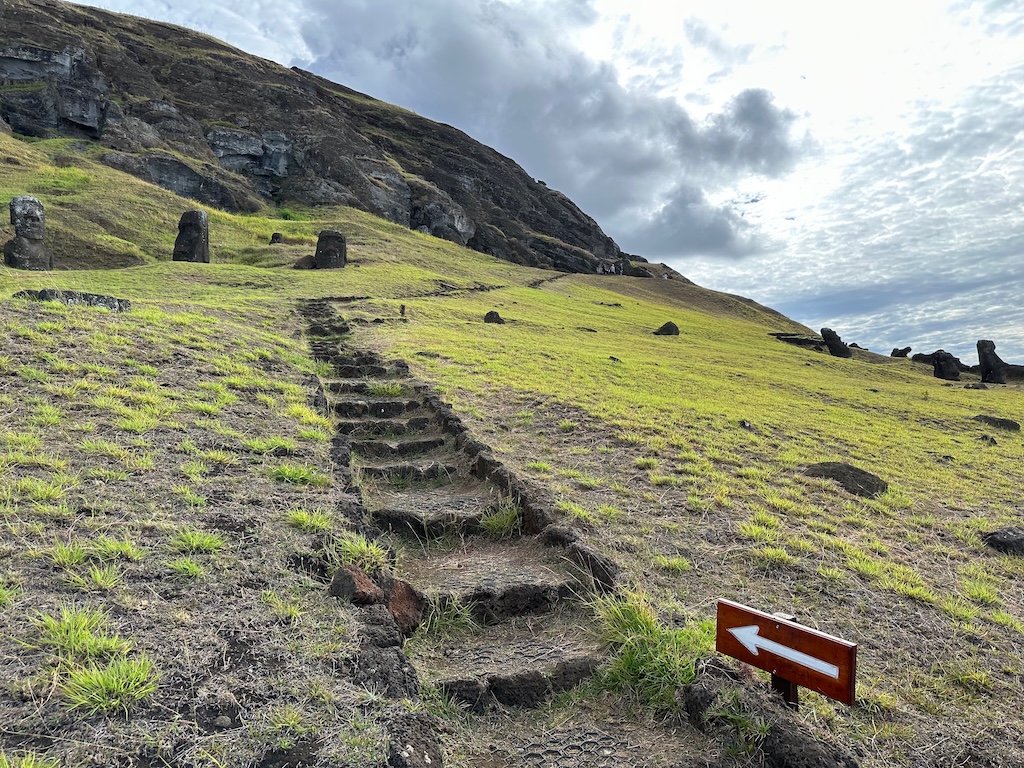
Presumably, if the trail is open, it’s possible to hike to the rim—an extra 100 feet or so in elevation—and get some incredible perspectives of both the moai and the crater itself. It would have been amazing to do. Maybe next time.
But beyond the moai themselves, the views from Rano Raraku are incredible. You can look out toward the coast, and below the crater you’ll see one of the island’s main ahus—a ceremonial platform where moai once stood facing inland. The combination of sweeping landscapes and ancient stonework makes this spot an absolute must-visit.
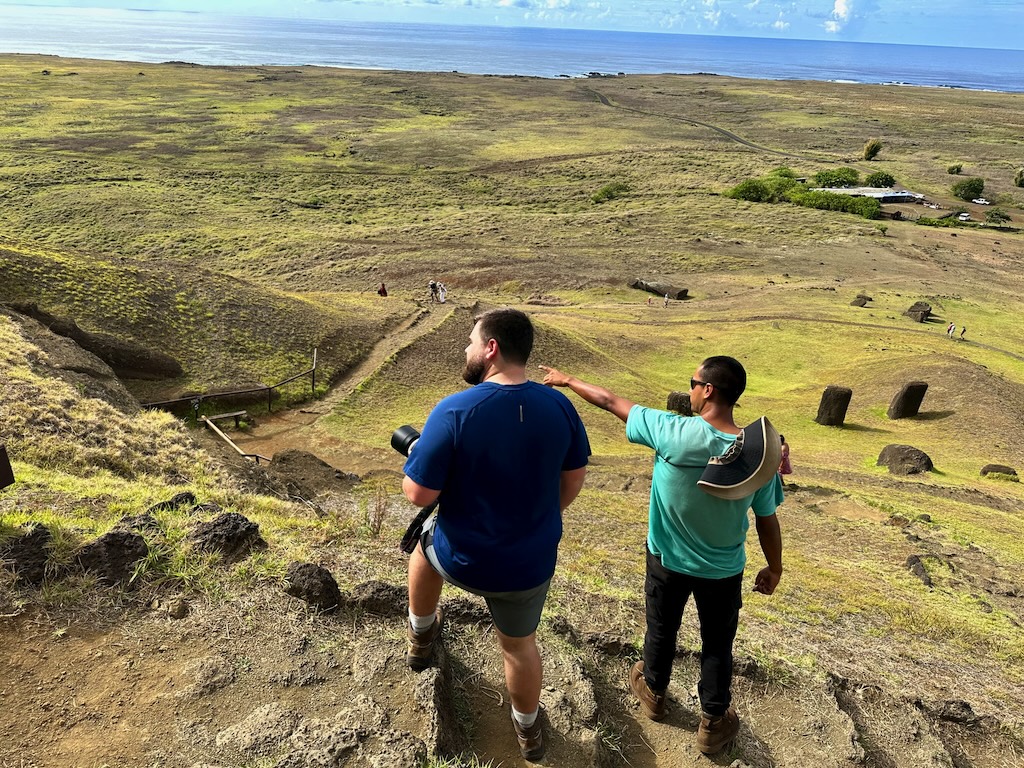
For photographers, it’s a dream. You can capture the statues from so many angles, with shifting light and dramatic backdrops. If you’re even remotely interested in getting that perfect shot, Rano Raraku has to be on your list.
Some interesting background about Rano Raraku
What’s remarkably interesting is that about 95% of the moai originated from Rano Raraku.
The remaining 5% were likely carved from different materials in other parts of the island—either because it was too difficult to transport massive statues from the quarry or because they were made before the carvers discovered how workable the tuff here was.
It’s important to note that while tuff is relatively easy to carve, it’s also more vulnerable to erosion. Weather has worn down many moai over the centuries, and when you get up close, it’s easy to see the effects. Without ongoing preservation efforts, it’s only a matter of time before more of these statues degrade further.
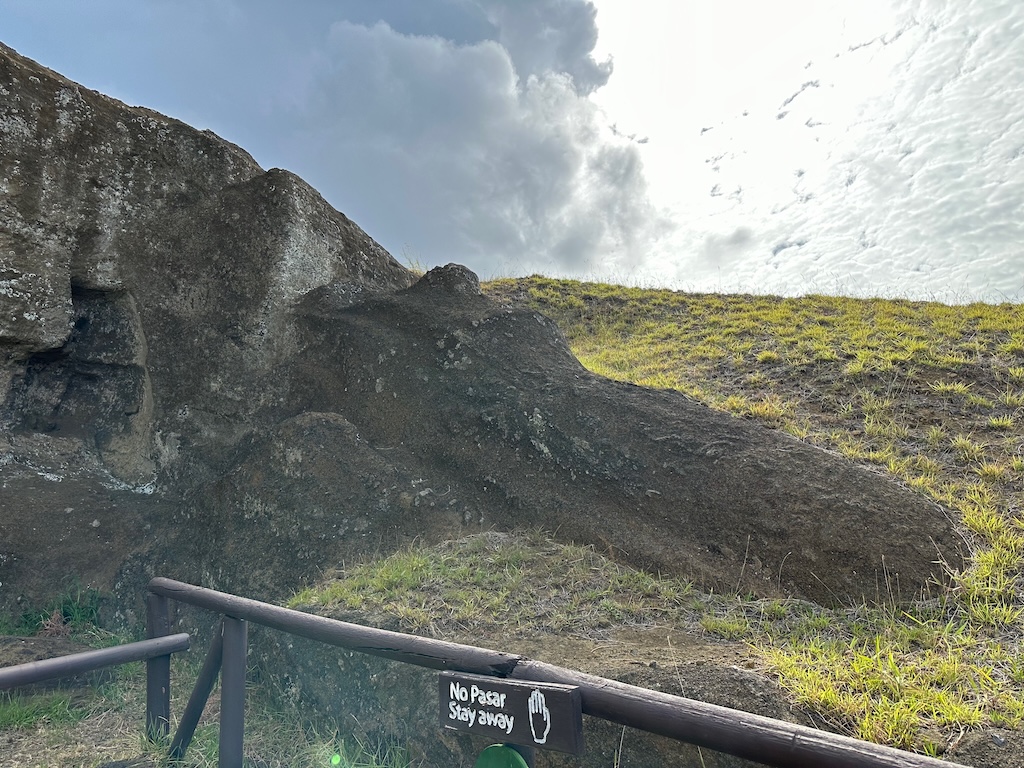
This fragility is also why it’s so important to respect the site—don’t touch the moai or disturb the ground around them. Every little bit of impact can accelerate their deterioration.
One of the most interesting things I learned while visiting is that creating moai was essentially a profession. There were skilled carvers whose expertise was entirely devoted to statue building—understandably, this isn’t something you just pick up overnight.
These professional moai creators would craft statues for different tribes, often in exchange for food, tools, or other goods they needed. The “price” of a moai would depend on factors like its size, level of detail, or customization.

You can imagine the number of skilled carvers who worked at Rano Raraku over generations—mentoring apprentices, directing projects, and refining their craft. This wasn’t just a place where statues “popped out of the earth”; it was a hub of skilled trade and commerce.
Early moai were smaller, but as carvers gained experience, the statues grew larger and more elaborate. Some of the biggest reached nearly 30 feet tall and had to be transported miles across hilly terrain. You realize how remarkable that feat is when you visit and see the landscape.
Probably the most impressive aspect of moai culture to me is that moai production went on for roughly 500 years, until the early 18th century. There’s debate about why it ended—some say it was due to a belief that the ancestors were no longer protecting the island, others point to conflicts among tribes, a lack of resources, or shifting cultural values.
Whatever the reason, the practice continued for centuries, which is truly impressive.
Final word
Visiting Rano Raraku isn’t just about seeing stone statues—it’s about stepping into centuries of human ambition, artistry, and culture. Standing among these moai, you can feel the weight of history and the vision of the people who carved them, guided by skill, tradition, and a remarkable sense of purpose. From unfinished giants to kneeling statues, from sweeping crater views to the stories of trade and craftsmanship, Rano Raraku offers a window into the ingenuity of the Rapa Nui people and the challenges they faced.
For anyone traveling to Easter Island, this is an unforgettable experience, a place to reflect, photograph, and appreciate one of humanity’s most extraordinary cultural achievements. Respect the site, take your time, and let the moai tell their story. It’s a journey you won’t forget.

Daniel Gillaspia is the Founder of UponArriving.com and the credit card app, WalletFlo. He is a former attorney turned travel expert covering destinations along with TSA, airline, and hotel policies. Since 2014, his content has been featured in publications such as National Geographic, Smithsonian Magazine, and CNBC. Read my bio.
