
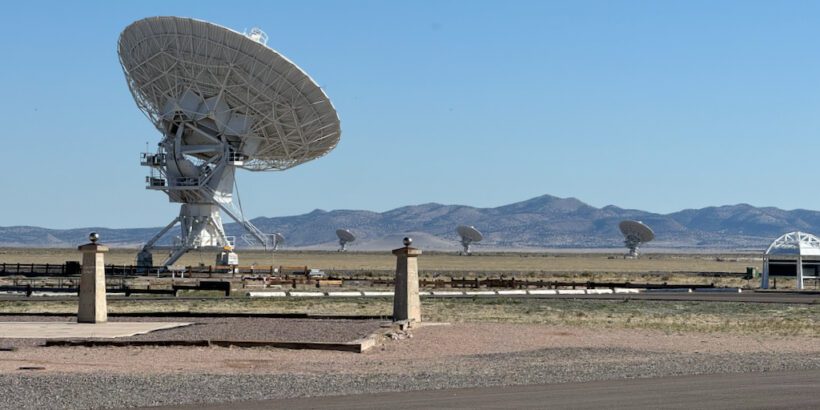
Miles of nothing. Just dust, tumbleweeds, and endless sky—until suddenly, it appears. Giant alien-looking dishes stretching across the horizon like something out of a sci-fi movie.
New Mexico’s remote desert landscapes have a way of surprising you, and none more so than the eerie, awe-inspiring Very Large Array. One minute you’re driving through barren land that seems untouched by time, the next you’re standing at the forefront of human discovery.
From secret history to space exploration, this place is full of wild contrasts. Here’s what happened when I visited one of the most mind-blowing scientific sites you’ve probably never heard of.
What is the Very Large Array?
The Very Large Array (VLA) is a world-renowned astronomical radio observatory located in the remote plains of San Agustin, New Mexico. (Yes, that’s the middle of nowhere.) Comprising 27 massive radio antennas (plus one maintenance antenna), the VLA spans more than 22 miles and is arranged in a Y-shaped configuration.
Visitors can explore the interactive Visitor Center, take a self-guided tour, and marvel at the sheer scale of the equipment that has been featured in numerous films and documentaries.
A visit to the VLA offers a unique blend of cutting-edge science and stunning natural beauty, making it a must-see destination for both space enthusiasts and curious travelers.

Brief history of the Very Large Array
The Very Large Array (VLA) has a captivating history that adds to the allure of New Mexico’s high desert.
Dedicated in 1980, the VLA was built to explore the universe through radio astronomy, a field that studies radio waves emitted by celestial objects. Nestled in the vast Plains of San Agustin, this array of 27 radio antennas works in unison to simulate a single, massive telescope, allowing astronomers to peer into the distant corners of the cosmos.
The choice of location was no accident, as the remote, quiet plains provide an ideal setting with minimal radio interference for detecting faint signals from space.
Over the decades, the VLA has become an iconic symbol of scientific advancement. It played a pivotal role in many groundbreaking discoveries, including the study of black holes, quasars, and the mapping of galactic structures. And yes, it also monitors for signs of extraterrestrial life.
The array’s significance extends beyond its scientific contributions; it has also become a cultural icon, featured in movies like “Contact” and inspiring countless individuals to gaze up at the stars with wonder.
Continually upgraded with the latest technology, the VLA remains at the forefront of astronomical research and is going through an expansion that’s going to replace the old antenna and add dozens more to the site allowing it to capture much more detail. Much of that expansion is currently planned for the latter part of this decade.
Our experience at the Very Large Array
Our journey began in Albuquerque, guiding us through the breathtaking landscapes of central New Mexico along HWY 60.
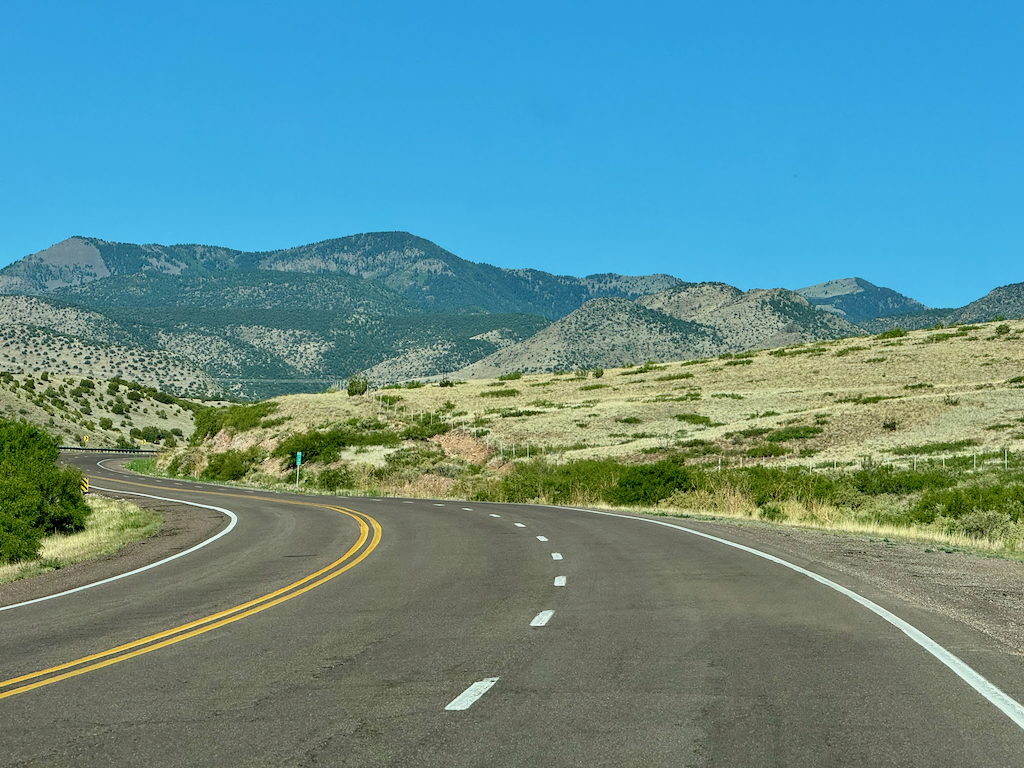
After about two hours, we caught our first glimpse of the enormous white dishes scattered across the expansive open plains, standing stark against the clear blue sky.
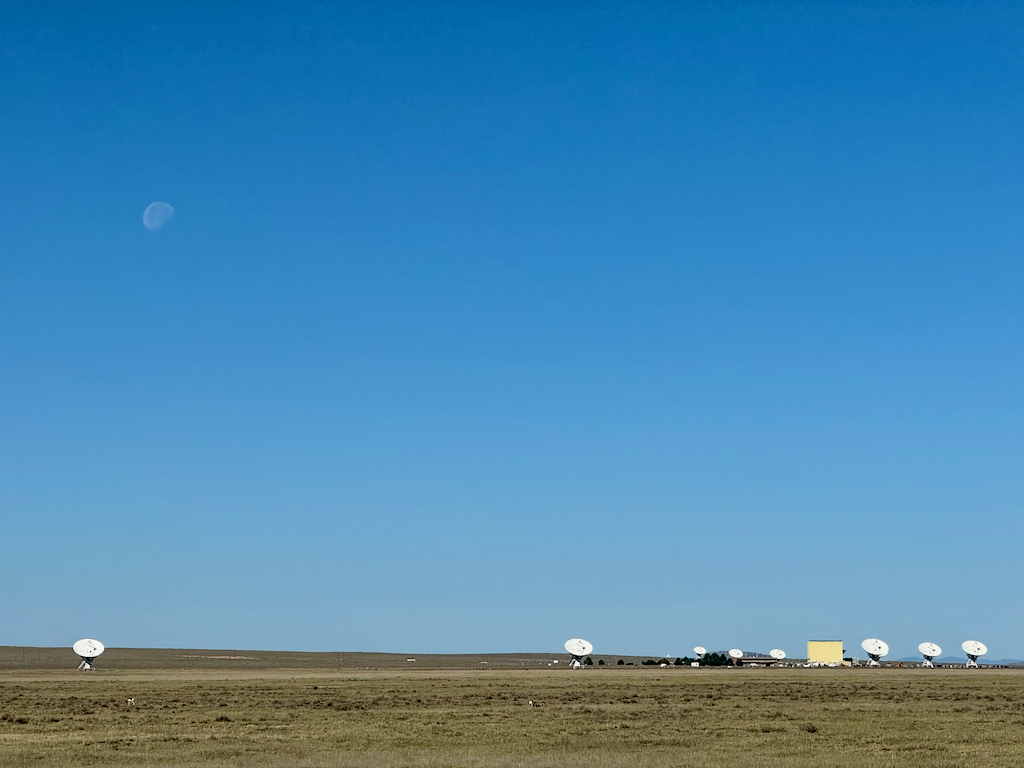
As we drew closer, the sheer size of these dishes became strikingly evident, each spanning an impressive 82 feet in diameter.

We arrived around 10 minutes before the 9 AM opening, hoping to get ahead of the Memorial Day crowds.
Upon entering the visitor center, I quickly realized I had the entire place to myself, granting me the freedom to explore the exhibits at my own pace.
At the Visitor Center, you can purchase tickets ($10 for adults) and watch various film exhibits that delve into the fascinating background of the VLA. There’s also a gift shop, though it was closed due to staff shortages.
You can grab a map and embark on the self-guided walking tour, which covers about half a mile. I highly recommend taking the tour; it’s an excellent opportunity to learn a lot and get up close to some of the antennas.

Keep in mind that you need to turn off all electronic devices in your vehicle, including your dash cam. Additionally, you’re asked to keep your phone off unless you’re taking pictures, in which case you should keep it in airplane mode. (You don’t want to interfere with the sensitive equipment here.)
In reality, if you’re like me, you may find yourself taking photos throughout the entire tour, so keeping your phone in airplane mode is probably the more practical approach. Cameras are fine to keep on.
The tour begins with a fascinating encounter with a solar radio telescope. You can position it towards the sun and get real-time readings, which is quite an interesting experience.
Throughout the tour, you’ll encounter 16 stations, each with well-done interpretive panels that provide more information about the telescope. You can really learn a lot on your visit.
You can complete the tour in about 20 minutes, but if you stop to read all of the interpretive displays, it will likely take closer to 30 to 45 minutes. Plus, there are some exhibits in the museum so if you really want to check out everything the place has to offer, plan on spending about an hour. (They have bathrooms inside the visitor center.)

During my early morning visit, the temperatures were still quite tolerable. After all, the site sits at nearly 7,000 feet above sea level. However, depending on the time of day you visit, you might encounter warmer temperatures.
While there are a few shaded areas where you can rest, it’s advisable to bring along some water, especially if you’re exploring during the scorching summer heat. Additionally, be mindful of wildlife, including snakes, and watch your step as you explore the area.

It’s very easy to follow along the path of the tour as signs take you from different features like the “world’s first radio sundial” to other sites that you can’t miss like the large VLA antenna, where you can get an up-close look at one of the massive dishes.

You’ll hear the gentle humming of the antenna, and if you linger long enough or pay close attention, you’ll witness the dish moving—sometimes slowly, other times more abruptly, almost as if it were alive.
Speaking of life, you may spot some fascinating creatures during your walk. Aside from potentially encountering a snake, keep an eye out for jackrabbits darting across the landscape. Additionally, in the vicinity, you’ll likely catch sight of the majestic pronghorn antelope, renowned as the fastest animal in North America.
One fascinating aspect of the VLA is that the antennas are periodically repositioned along the rail system. Depending on the requirements, they are either placed closer together or moved farther apart. This adjustment is made possible by a network of railroad tracks that help transport the antennas.


The distance between the antennas varies depending on the type of observations astronomers are conducting. For example, when the antennas are closer together, they are suited for studying larger and more diffuse objects.
Conversely, when spaced farther apart, they can focus on smaller, more detailed celestial phenomena. This flexibility allows the VLA to adapt to a wide range of astronomical research needs.
After completing the walking tour, consider driving over to the facility housing one of the antennas. Inside this massive building, you’ll always find one undergoing maintenance or repair, offering another opportunity to get a closer look at these impressive structures.

I didn’t encounter a single person during the tour, as Brad stayed back with our pup in the Jeep to make sure he was comfortable.
Strolling solo among these giant antennas was quite an experience. It made me feel both humbled and awed, standing amidst such advanced technology that connects us to the farthest reaches of the universe.
I also enjoyed seeing the array in its current form before any future expansion projects potentially reshape the site. And I’ll definitely be interested in returning at some point when the new antennas are installed.

Daniel Gillaspia is the Founder of UponArriving.com and the credit card app, WalletFlo. He is a former attorney turned travel expert covering destinations along with TSA, airline, and hotel policies. Since 2014, his content has been featured in publications such as National Geographic, Smithsonian Magazine, and CNBC. Read my bio.